%201.svg)


HIPAA Compliance Checklist for 2025

90% of SaaS buyers are overpaying by 20 to 30%, according to CFO Magazine. Not because they lack budget awareness, but because they are not negotiating contracts with vendors with the right strategy.
Vendor negotiation covers pricing, SLAs, payment schedules, data security, termination clauses, and renewal conditions. Done right, it saves money and reduces risk. Done wrong, it locks you into unfavorable terms that compound in cost every renewal cycle.
This guide covers 10 proven tactics for negotiating contracts with vendors, plus how contract negotiation software and AI are changing the game for procurement teams.
TL;DR
1. Why Negotiating Contracts With Vendors Is Non-Negotiable?
Most companies accept vendor quotes without pushing back, unaware that those prices are often 20 to 30% above market rate. Vendors price high because they expect buyers to negotiate. If you do not, you are subsidizing the discount someone else is getting.
The potential upside of negotiating with vendors and suppliers is significant:
- Lower total SaaS spend with more favorable pricing tiers
- Improved cash flow through flexible payment terms
- Stronger contractual protections around data, SLAs, and termination
- Maximum value from every vendor relationship over the contract lifecycle
2. The 4 Stages Every Vendor Contract Negotiation Goes Through
Understanding these stages ensures you enter every negotiation prepared rather than reactive. Preparation is where most buyers lose leverage before the conversation even starts.
3. 10 Proven Tactics for Negotiating Contracts With Vendors
1. Start With a Clear Understanding of What Your Team Actually Needs
Before engaging any vendor, identify and list the features, services, and terms essential for your business. This prevents vendor upsells from derailing the conversation and gives you a clear evaluation framework from the start.
Entering negotiations without defined requirements is like going to battle without a plan. You are unlikely to emerge with favorable terms.
2. Know Which Contract Clauses to Prioritize
Negotiating contracts with vendors starts with knowing which clauses carry the most financial and legal risk.
3. Always Have Multiple Vendor Options
Never go into negotiating contracts with vendors with just one option. Competition is your most powerful source of leverage.
When a vendor knows you have alternatives, they are significantly more likely to offer their best pricing and most flexible terms. Use competing offers as direct leverage and maintain multiple active vendor relationships even during renewal cycles.
4. Never Reveal Your Budget or Accept the Initial Quote
This is the most critical rule in negotiating with vendors and suppliers. Disclosing your budget gives the vendor a ceiling to price toward rather than a floor to compete from.
Always respond to the first proposal with a counter. Vendors intentionally start high, knowing they will need to come down. Your counteroffer signals that you will not simply accept their terms.
- Keep budget information private throughout the negotiation
- Always counter the first proposal, regardless of how reasonable it seems
- Use silence strategically after countering; it creates pressure without confrontation

5. Negotiate Only What You Need
Vendors will try to upsell you on features and products you did not ask for. Stay focused on negotiating contracts with vendors based solely on your defined requirements.
Getting lured into purchasing additional services results in wasted spend and tools your team will not use. Vendors respect buyers who know exactly what they want and are more likely to offer genuine concessions when you demonstrate that clarity.
6. Know When to Walk Away
Sometimes the vendor will not budge on the terms that matter most. You must be willing to leave.
Clear signals it is time to walk away:
- Vendor refuses to accommodate reasonable data security requirements
- Termination conditions are unacceptable after multiple rounds of discussion
- Pricing remains significantly above market benchmarks
- SLA commitments fall below what your operations require
Walking away can also prompt the vendor to reconsider and come back with a more reasonable proposal. It is a more common outcome than most buyers expect.
7. Use Long-Term Contracts and Flexible Pricing as Leverage
Vendors want long-term commitments because they eliminate churn risk. Use that to your advantage when negotiating contracts with vendors.
Offer longer commitments in exchange for:
- Discounted annual or multi-year pricing
- Free additional seats or feature tiers
- More favorable SLA terms and payment flexibility
As CloudEagle CEO Nidhi Jain recommends, consider pay-as-you-go pricing models whenever feasible. This flexibility gives you more control over spending and lets you scale usage as business needs evolve.
8. Negotiate for Mutual Benefit
When negotiating contracts with vendors, aim for a deal that works for both parties. Vendors are more likely to offer concessions when they feel their interests are being considered.
Practical win-win trades:
- Commit to a longer contract term in exchange for lower monthly fees
- Accept slightly less favorable termination conditions for stronger SLAs
- Offer a case study or reference in exchange for an additional discount
This approach secures better terms and lays the foundation for a stronger long-term vendor relationship.
9. Research Your Vendor's Customers and Market Position
Negotiating with vendors and suppliers works best when you understand their positioning before entering any discussion.
What to research:
- Types of clients they typically serve, and whether similar in size to your organization
- Online reviews, case studies, and industry rankings reveal reliability and support quality
- Financial health and growth trajectory indicate how aggressively they need to close deals
- Pricing patterns from peer organizations using similar tools
A vendor actively seeking growth will negotiate harder than one with a full pipeline. Knowing the difference changes your entire approach.
10. Bring in Expert Help When Your Team Lacks Bandwidth
If your internal team lacks the time or expertise to negotiate effectively, contract negotiation software and specialized services like CloudEagle's assisted buying can make a significant difference.
CloudEagle has a team of seasoned SaaS buying experts with over $1 billion in negotiated spend and $120 million in proven savings. They handle everything from vendor research and pricing benchmarking to closing deals on your behalf.
4. How AI Tools for Automated Contract Negotiation Are Changing the Game?
AI tools for automated contract negotiation are shifting how procurement teams approach vendor deals. What used to take days of manual review now happens in minutes.
For teams managing dozens of vendor contracts simultaneously, contract negotiation software with AI capabilities is the difference between reactive renewal management and proactive vendor strategy.
5. How CloudEagle.ai Helps You Win at Vendor Negotiations?
CloudEagle combines contract negotiation software, benchmarking intelligence, and expert-assisted buying into one platform built for SaaS procurement teams.
It brings structure, timing, and data into negotiating contracts with vendors, so every deal is driven by leverage, not guesswork.
Benchmarking That Anchors Every Conversation
When negotiating contracts with vendors, the biggest gap is a lack of pricing visibility. CloudEagle’s contract negotiation software solves this by grounding every discussion in real market data.

- Compare pricing across similar vendors and SKUs
- Identify overpriced contracts instantly
- Use benchmarks to justify pricing corrections
Usage Insights That Strengthen Your Position
Effective contract negotiation software should not just track contracts; it should strengthen your negotiation position. CloudEagle does this by connecting usage data directly to vendor negotiations.
- Surface license utilization, idle users, and feature adoption
- Identify over-provisioning before renewal
- Push back on unnecessary upgrades or expansions
Control Over Renewal Timing
One of the biggest advantages of contract negotiation software is controlling when negotiations happen. CloudEagle ensures you are never negotiating under pressure.
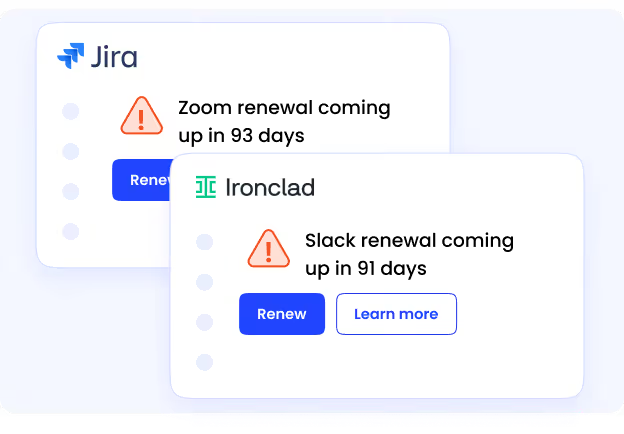
- Trigger workflows well before notice periods
- Ensure stakeholders review contracts early
- Prevent auto-renewals without evaluation
AI-Driven Contract Intelligence
Negotiating contracts with vendors becomes significantly easier when key terms are not buried in documents. CloudEagle’s contract negotiation software surfaces what actually matters.
- Extract renewal clauses, notice windows, and price escalations
- Highlight negotiation risks ahead of time
- Ensure no key term is missed during review
Consolidation as a Negotiation Lever
Contract negotiation software should help you think beyond individual deals. CloudEagle enables stronger leverage by showing the bigger picture across vendors.

- Identify overlapping tools across your stack
- Highlight consolidation opportunities
- Use vendor rationalization to strengthen leverage
Built-In Procurement Intelligence
CloudEagle extends contract negotiation software with built-in procurement expertise, making every negotiation structured and repeatable.
- Provide negotiation insights and recommended strategies
- Standardize how contracts are evaluated and negotiated
- Support consistent outcomes across teams
Stop Negotiating Blind. Start Winning Vendor Deals With Data.


6. Is Your Team Leaving Money on the Table at Every Renewal?
Most procurement teams discover they overpaid only after the contract is signed and the renewal window has closed. By then, the leverage is gone.
If your team cannot answer these questions confidently, you are likely leaving significant value on the table:
- Do you know what peer organizations pay for the same SaaS tools?
- Are any contracts set to auto-renew in the next 90 days without a review?
- Does your team have the bandwidth to negotiate every renewal properly?
- Are you using AI tools for automated contract negotiation or still reviewing contracts manually?
Negotiating contracts with vendors is a continuous process that requires the right data, the right timing, and the right support.
Conclusion
Negotiating contracts with vendors effectively is one of the highest-ROI activities a procurement team can undertake. The 10 tactics in this guide give you a proven framework for securing better deals at every stage of the vendor lifecycle.
The rise of AI tools for automated contract negotiation and contract negotiation software means teams no longer need to negotiate blindly. Real-time benchmarking data, automated renewal workflows, and AI-powered clause detection have leveled the playing field between buyers and vendors.
CloudEagle.ai brings all of this together, combining intelligent contract negotiation software with expert-assisted buying, price benchmarking, and end-to-end procurement automation.
Ready to stop overpaying for SaaS? Book a demo with CloudEagle.ai today.
Frequently Asked Questions
1. How to negotiate with vendor sample?
Start by researching market rates, knowing your must-haves, and getting multiple quotes. Open with a lower counteroffer, focus on total value (not just price), and document all terms clearly to avoid disputes.
2. What are the 5 C's of negotiation?
The 5 C’s are Clarity, Confidence, Control, Creativity, and Collaboration. Together, they help negotiators set clear goals, maintain composure, manage discussions, find creative solutions, and build mutually beneficial agreements.
3. What is the 70/30 rule in negotiation?
The 70/30 rule means listening 70% of the time and talking only 30%. This approach allows you to fully understand the other party’s needs and motivations, which can lead to better solutions and stronger outcomes.
4. How do you successfully negotiate a contract?
Define clear objectives, research the other party, and prepare alternatives. Focus on win-win outcomes, stay flexible, and address key clauses like pricing, SLAs, and termination terms before finalizing the agreement.
5. What does it mean to negotiate business contracts?
It’s the process of discussing and agreeing on terms for a legal agreement between businesses. This includes pricing, timelines, service scope, and obligations to ensure both parties benefit and risks are minimized.
6. What is the contract with vendors in ERP?
In ERP systems, a contract with vendors is a digital record of agreed terms for goods or services. It includes pricing, delivery schedules, and performance metrics, enabling better tracking, compliance, and vendor management.
Stop Negotiating Blind. Start Winning Vendor Deals With Data.


.avif)


.avif)
.avif)


.png)