You need to enable JavaScript in order to use the AI chatbot tool powered by ChatBot

10 Most Powerful AI Tools for Finance in 2026 To Optimize FinOps

Share via:
blog-cms-banner-bg
Little-Known Negotiation Hacks to Get the Best Deal on Slack
cta-bg-blogDownload Your Copy

HIPAA Compliance Checklist for 2025

Download PDF

The finance industry is rapidly transforming, and the right AI finance tools are now essential for automating processes, improving accuracy, and driving smarter business decisions.

Whether you’re a CFO at a global enterprise or part of a lean startup team, the demand for AI financial statement analysis, predictive forecasting, and automated reporting is higher than ever.

But with so many solutions on the market, how do you know which are the best AI tools for finance, and which are just hype?

In this guide, we highlight the top 10 B2B SaaS AI tools for finance available today, detailing their key features, best use cases, and the unique advantages each brings to the table.

TL;DR

  • AI tools for finance help automate tasks like invoicing, forecasting, fraud detection, and compliance, boosting speed and accuracy across operations.
  • Tools like CloudEagle.ai, AlphaSense, and Upstart are leading solutions for spend optimization, market intelligence, and AI-based lending.
  • Choosing the right tool depends on integration, security, scalability, usability, and cost, especially for accounting and finance workflows.
  • While AI brings immense benefits, risks like algorithmic bias, security threats, and a lack of transparency require strong governance.
  • CloudEagle.ai stands out by offering AI-powered SaaS spend control, renewal automation, and actionable financial insights, making it one of the best AI tools for finance today.

How AI Works in Finance?

AI tools are transforming financial operations, including:

  • Financial Planning & Analysis (FP&A): Machine learning models enhance forecasting accuracy.
  • Accounts Payable & Receivable (AP/AR): NLP extracts data and detects invoice inconsistencies.
  • Risk & Compliance: Predictive models assess risks and improve regulatory compliance.
  • Fraud Detection: Identifies suspicious activity in real time.

Key Advantage: AI continuously learns and adapts, making it invaluable for complex financial decisions beyond what rules-based automation can achieve.

AI Tools for Finance: What Do They Do?

Finance teams spend more time chasing data than acting on it. AI tools for finance change that, turning hours of manual reconciliation, reporting, and forecasting into automated workflows that surface what actually matters, when it matters.

  • Automate repetitive tasks, like invoice processing and reconciliations, freeing up staff for higher-value work.
  • Deliver real-time AI financial statement analysis and predictive analytics
  • Detect and prevent fraud through advanced pattern recognition
  • Enhance compliance by monitoring transactions and flagging anomalies
  • Personalize customer experiences and financial product recommendations

The AI in the fintech market alone is growing at a 25.9% CAGR, expected to reach $17.8 billion in 2025, driven by the need for better risk management, fraud prevention, and smarter decision-making.

Don’t Just Adopt AI. Optimize It.

Get the FinOps best practices to control AI spend, optimize budgets, and drive measurable ROI.
Download Best Practices

What Are the AI Use Cases in Finance (Cost, Security, or IT Workload)

The most effective AI finance tools deliver power across three distinct lanes.

  • Cost lane maximizes ROI by automating AP/AR and FP&A workflows, utilizing granular feature-usage data 
  • In the Security lane, real-time anomaly detection and audit-ready evidence are mandatory to neutralize Shadow AI risks
  • The IT Workload lane leverages automated provisioning and no-code approvals to compress resolution times across critical audit and close cycles.

Lane Finance Workflows Primary Persona KPI Improved
Cost AP/AR, FP&A, procurement/renewals, close Procurement & Finance 10–30% spend reduction
Security Fraud/AML, audit, access reviews CISO, CIO/CAIO Faster audit prep; Shadow AI eliminated
IT Workload Provisioning, deprovisioning, access reviews IT Ops Up to 80% MTTR reduction

Top 10 B2B SaaS AI Tools for Finance in 2026

A range of AI finance tools is transforming the finance industry by streamlining operations, delivering advanced insights, and enhancing decision-making. Leading examples include AI-driven solutions for financial risk management, accounts payable automation, bookkeeping, and financial planning and analysis.

Here are the 10 most advanced AI tools for finance, making a significant impact in the world of finance. Each solution has been chosen for its cutting-edge features, proven reliability, and strong performance across essential financial operations.

1. CloudEagle.ai

CloudEagle.ai is an AI-powered SaaS management and identity governance platform with spend optimization capabilities that help finance teams optimize software spending, automate renewals, and eliminate waste. It’s one of the best AI tools for finance for companies struggling with shadow IT or overspending on subscriptions.

From vendor relationship management and automating renewals to providing detailed license utilization reports, CloudEagle.ai uses intelligent automation and predictive analytics to save time and money. As one of the most advanced AI finance tools, it offers deep visibility and automation across the board.

What makes it stand out is its AI-driven negotiation and benchmarking engine. It tells you exactly when a contract is about to renew, what similar companies are paying for the same tool, and even preps renewal playbooks.

Complete Spend Visibility

CloudEagle.ai provides a unified dashboard that consolidates spending information from various departments, software solutions, and vendor contracts.

AI tools for finance showing app usage, duplicate, and unauthorized app detection for spend control

If you're considering AI tools for finance that give you transparency into every dollar, this one delivers end-to-end spend intelligence.

License Management and Reclamation

The platform automatically tracks software utilization and identifies both idle and low-usage licenses. With just a few simple steps, you can recover and redistribute unused licenses to financial teams who require additional access.

Automated license management workflow in ai tools for finance dashboard for efficient usage

By eliminating unnecessary waste and postponing the purchase of unneeded licenses, finance teams can avoid overspending on duplicate software subscriptions, helping save thousands of dollars each year.

Automated renewal management

CloudEagle.ai sends automated renewal alerts and generates customized playbooks well in advance. It also gives you visibility into contract terms, billing cycles, and renewal clauses.

You’ll never miss a renewal deadline again, and you’ll be able to renegotiate contracts proactively instead of reacting at the last minute. For organizations investing in AI tools for finance, these capabilities automate a major source of hidden spend.

Procurement Workflows

By leveraging automated workflows, vendor management, and seamless collaboration with key stakeholders, you can simplify and optimize every step of the SaaS procurement process directly within the platform.
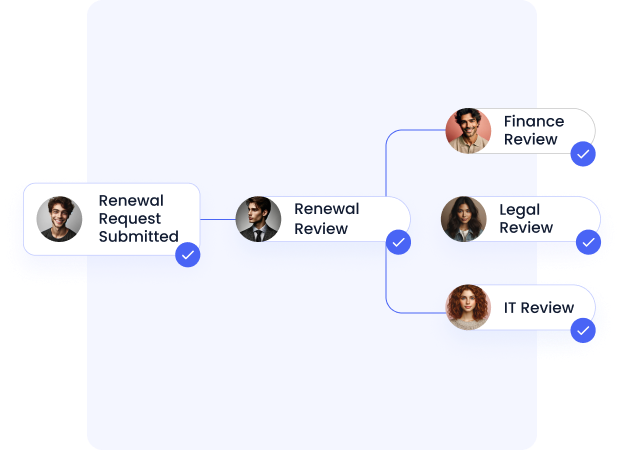
CloudEagle's procurement workflows

This helps put a stop to unapproved spending and makes sure every purchase is properly reviewed by your finance team. That way, you save both time and money by avoiding costs from unauthorized tools.

Price Benchmarking Data for Negotiations

CloudEagle.ai’s AI engine offers real-time price benchmarks, showing you what similar companies pay for the same software.

AI tools for finance showing Zoom Pro price benchmarking and license count comparison data

The platform also identifies key points for negotiation and creates effective renewal strategies based on past successful deals. Recognized as a leading AI tools for finance, its robust benchmarking features empower your team to approach negotiations with solid data and greater assurance.

Shadow IT Prevention

Using SSO and expense integrations, CloudEagle.ai detects unapproved software purchases across your organization. It flags unauthorized tools and gives IT and finance teams full visibility into all app activity.

By identifying and removing undisclosed subscriptions while streamlining shadow IT, you minimize compliance issues and prevent unnecessary financial waste.

Pros

  • AI-led renewal forecasting and vendor benchmarks
  • Deep insights into app usage, license waste, and compliance risks
  • Streamlined purchase processes and approval chainsExtensive integrations library supporting ERP, SSO, and CLM systems

Best For

Finance and procurement teams that want to cut software waste, optimize renewals, and make smarter SaaS purchasing decisions.

"We had limited visibility into SaaS usage and spending across departments, which made it hard to control costs or manage renewals effectively. There was no centralized process, and unused licenses often went unnoticed. CloudEagle.ai changed that by giving us the tools and insights to track usage, benchmark pricing, and make informed decisions. Now we have full control over our software spend," - Abhishek Khare, SVP, Chief Acceleration Officer, Horizon Media

Read Success Story -->

Pricing:  Enterprise pricing varies based on user count and integrations. Request a custom quote to know pricing in detail.

2. AlphaSense

AlphaSense is a market intelligence platform used by investment banks, hedge funds, and enterprise strategy teams. It uses AI and NLP to sift through millions of financial documents, like SEC filings, earnings transcripts, news articles, and analyst reports, to deliver relevant insights in real time.
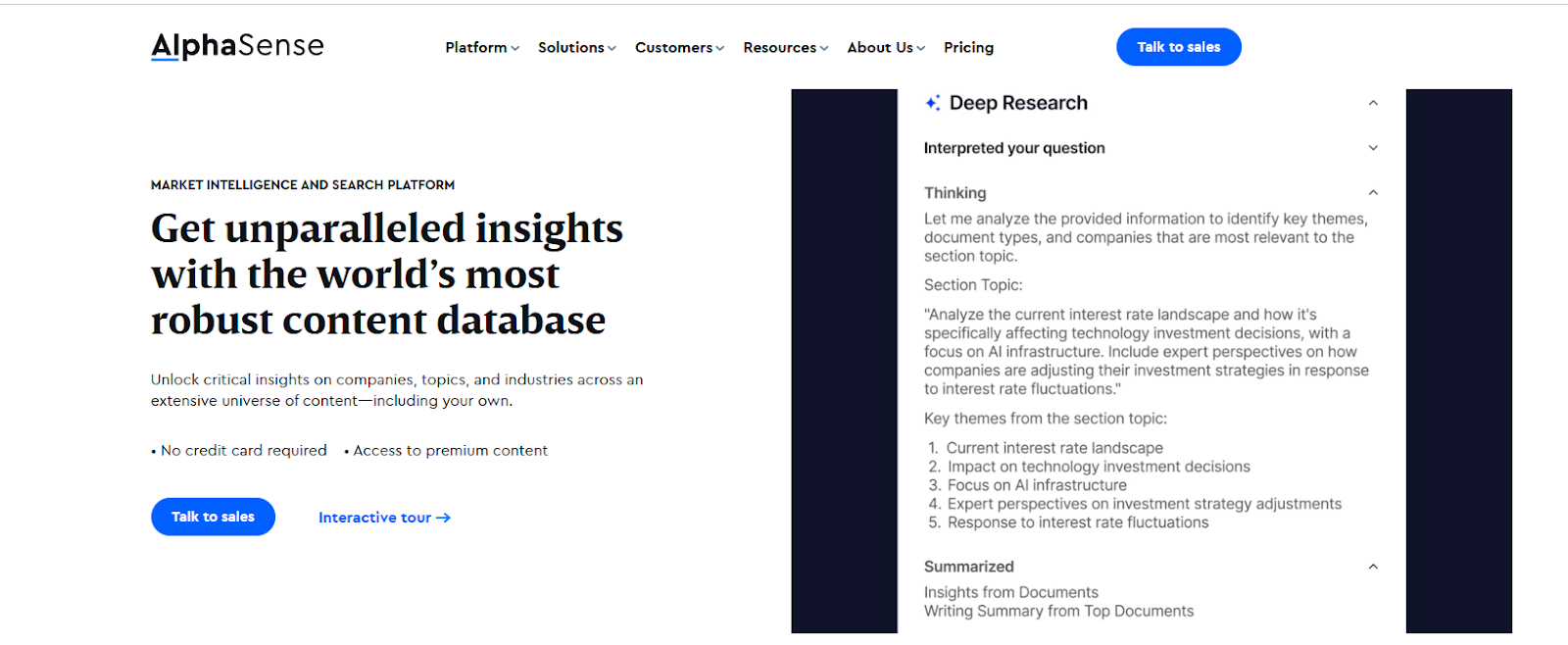
AI Tools for Finance: AlphaSense Dashboard

With smart alerts and sentiment analysis, AlphaSense helps teams stay ahead of market-moving events. It’s often cited among the best AI finance tools due to its robust document analysis capabilities.

Pros

  • Rapid, precise extraction of financial data with NLP technology
  • Real-time alerts on financial news and market changes
  • Great for due diligence and competitive analysis

Cons

  • Premium pricing
  • More useful for research than operational finance

Best For

Financial analysts, investor relations teams, and corporate strategists.

Pricing:

Available as an annual subscription, with options for flexible per-seat or organization-wide licenses. Custom pricing is available upon request.

3. Upstart

Upstart is transforming consumer lending using AI. It moves beyond traditional credit scoring models by using alternative data like education, employment history, and spending habits to assess creditworthiness. This results in more inclusive lending and higher loan approval rates.

AI Tools for Finance: Upstart Dashboard

Financial institutions using Upstart have seen reduced defaults and increased access to credit for underserved populations. It’s a great example of how AI finance tools are improving both efficiency and fairness in lending.

Pros

  • Uses AI to increase loan approval accuracy
  • Reduces reliance on FICO scores alone
  • Proven to expand access to credit fairly

Cons

  • Limited to lending and underwriting use cases
  • Requires large datasets to fine-tune models

Best For

Lenders, credit unions, and fintechs are aiming to modernize loan evaluation.

Pricing: Personal loan annual percentage rates range from 6.6% to 35.99%, with origination fees between 0% and 12%, depending on the applicant’s financial profile.

4. Darktrace

While not built exclusively for finance, Darktrace is one of the best AI solutions for financial services automation that helps organizations seeking to protect sensitive data. It uses self-learning AI to detect and respond to cyber threats in real time. Its ‘Cyber AI Analyst’ feature can investigate incidents in seconds, saving analysts hours of manual work.

AI Tools for Finance: Darktrace Dashboard

Finance departments depend on this solution to secure transactions, safeguard sensitive financial data, and detect fraudulent activity. As one of the leading AI tools for finance, it is essential for strengthening cybersecurity and managing operational risks.

Pros

  • Automated identification of irregularities and potential data breaches
  • Learns and adapts to changing financial environments
  • Works seamlessly with current security systems

Cons

  • Not a finance-focused tool
  • May need cybersecurity knowledge for optimal use

Best For

Financial institutions and enterprises with strict data security requirements.

Pricing: Median yearly costs are approximately $55,385, with a range from $17,472 to $126,564 depending on the level of service required. According to AWS Marketplace, the legacy pricing model starts at $30,000 for 200 hosts and goes up to $100,000 for up to 10,000 hosts.

Your Savings Begins with License Optimization

The first rule of spend optimization: Optimize your SaaS and AI licenses, optimize it before your CFO sees it!
Download Best Practices PDF

5. Kavout

Kavout combines machine learning and quantitative models to deliver intelligent stock analysis tools. Its flagship feature, the “Kai Score,” ranks equities based on predictive modeling and fundamental data analysis.

AI Tools for Finance: Kavout Dashboard

This AI finance tool is ideal for those in the investing world who want an edge in building smarter portfolios and making data-backed trades. It also has features that support AI financial statement analysis for deeper investment insights.

Recognized as a leading AI solution in the financial sector, Kavout excels in supporting quantitative analysis and streamlining equity screening processes.

Pros

  • Powerful predictive analytics for stocks
  • Kai Score helps simplify investment decisions
  • Visualizations for market trends and forecasts

Cons

  • Geared toward trading and investing
  • Less relevant for general finance operations

Best For: Traders, asset managers, and hedge fund analysts.

Pricing: Offers a complimentary basic plan, with Pro features available for $20 per month

6. Zest AI

Zest AI helps financial institutions build fairer and more accurate credit models using machine learning. Unlike traditional credit scoring, Zest considers thousands of variables to improve lending outcomes and reduce bias.
AI Tools for Finance: Zest AI Dashboard

It also helps institutions comply with regulations like the Equal Credit Opportunity Act (ECOA) by making models more transparent and explainable. It stands out among AI tools for finance focused on inclusive and compliant lending.

Pros

  • AI underwriting models improve loan performance
  • Reduces bias in credit scoring
  • Easily integrates into lending platforms

Cons

  • Narrowly focused on credit/lending use cases
  • Needs solid historical data for training models

Best For

Banks, fintech lenders, and credit unions are looking to improve risk modeling.

Pricing: Not publicly listed

7. Kensho (by S&P Global)

Kensho provides AI-powered tools to help financial institutions analyze macroeconomic trends and complex financial data. It’s used by some of the world’s largest financial players to support decisions on trading, forecasting, and reporting.

AI Tools for Finance: Kensho Dashboard

For analysts tracking macro trends and real-time data, Kensho is one of the most powerful AI tools for finance that connects unstructured information to actionable insights.

Pros

  • AI tools for event impact analysis and forecasting
  • Deep macroeconomic modeling capabilities
  • Trusted by top financial institutions

Cons

  • Steep learning requirement
  • Primarily designed for large-scale or enterprise financial operations

Best For

Institutional investors, banks, and data-driven finance teams.

Pricing: Not disclosed

8. Dataminr

Dataminr brings real-time alerts to finance teams by analyzing public data, including social media, news, and web activity. It detects breaking news and market-moving events before they hit mainstream outlets.
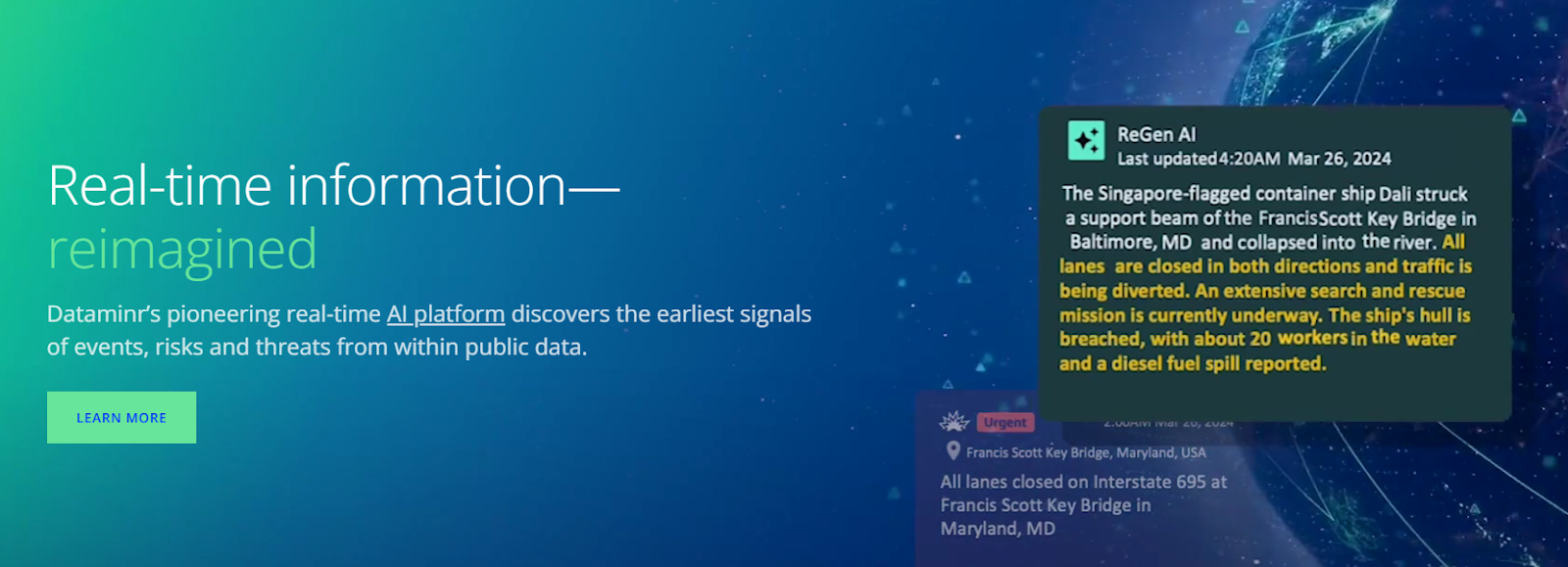
AI Tools for Finance: Dataminr Dashbaord

Dataminr is recognized as one of the leading AI tools for finance due to its advanced capability to deliver real-time alerts on significant market events. This empowers financial teams to respond swiftly to new risks and evolving opportunities.

Pros

  • Real-time alerts on external risk factors
  • Early warning system for financial disruptions
  • Enhances regulatory compliance and crisis management

Cons

  • Excess data may overwhelm users without effective filtering
  • Not a financial planning tool

Best For

Teams managing risk, market exposure, or global investments.

Pricing: Single-user access to Dataminr First Alert is priced at $30,000 per year.

9. Ayasdi

Ayasdi applies advanced machine learning and topological data analysis (TDA) to uncover hidden patterns in complex financial data. It’s especially powerful in detecting fraud, identifying risk clusters, and complying with regulatory demands.

AI Tools for Finance: Ayashi Dashboard

Many banks use Ayasdi for anti-money laundering (AML) and Know Your Customer (KYC) workflows.  It’s one of the best AI tools for finance focused on compliance and fraud analytics.

Pros

  • Unique TDA-powered pattern recognition
  • Used for fraud, AML, and regulatory reporting
  • Easily handles large-scale enterprise deployments

Cons

  • Niche application focused on compliance
  • Needs advanced technical knowledge for complete implementation

Best For

Compliance teams and financial institutions are tackling fraud and money laundering.

Pricing: Available exclusively through direct vendor engagement; operates on an enterprise SaaS subscription.

10. IBM Watsonx

Watsonx is IBM’s enterprise AI platform, built for scalable, secure, and explainable AI across industries, including finance. It offers powerful tools for document understanding, financial modeling, and process automation.

AI Tools for Finance: IBM Watsonx Dashboard

Many enterprises consider Watson one of the most versatile AI tools for finance, thanks to its customizability and enterprise-grade machine learning capabilities.

Pros

  • Supports advanced LLMs and finance-specific models
  • Scalable automation for audits, FP&A, and reporting
  • Enterprise-grade security and explainability

Cons

  • Needs extensive tailoring
  • Best suited for enterprise-level or larger finance teams

Best For

Large finance teams are looking for an end-to-end AI platform with audit and governance built in.

Pricing: Not publicly listed

How Will AI Automate Finance?

AI in finance can handle tasks like data entry faster and more accurately than humans. It efficiently processes large volumes of data to detect discrepancies, generate insights, and perform predictive analytics with minimal effort.

Finance AI tools should be seen as a powerful assistant, not a replacement. It enables you to do more with less, helping you focus on what really matters: insight, strategy, and long-term planning.

What Are The Benefits of AI in Finance?

AI tools for finance deliver measurable improvements that transform operations and drive strategic value across organizations. Finance teams implementing AI finance automation consistently report significant performance gains.

Here are some of the key advantages:

  • Speed and Accuracy: Automated processing reduces month-end close time by 40-60% while eliminating manual calculation errors in invoicing and reconciliation
  • Real-time Visibility: Live dashboards provide instant access to financial metrics, cutting reporting cycles from weeks to days
  • Predictive Forecasting: Machine learning algorithms improve budget accuracy by 25-30% and identify potential cash flow issues months in advance
  • Fraud Reduction: AI-powered anomaly detection catches suspicious transactions in real-time, reducing fraud losses by up to 50%
  • Audit and Regulatory Compliance: Automated records deliver 99% precision and reduce audit prep time by up to 70%
  • Cost Optimization: AI identifies redundant SaaS subscriptions and underused licenses, typically saving organizations 15-25% on software costs annually
  • Scalability: Automated workflows handle increasing transaction volumes without proportional staff increases, supporting business growth efficiently

These outcomes demonstrate how the best AI for finance transforms operations from reactive reporting to proactive strategy, enabling teams to focus on insights rather than manual processing.

General-Purpose AI Tools for Finance (for research, writing, and analysis)

Beyond specialized platforms, finance teams increasingly rely on general-purpose AI assistants for day-to-day productivity tasks.

These tools complement, not replace, purpose-built finance AI tools, handling research, writing, and light analysis across the full workflow.

Category Best Finance Tasks Data Caveat Governance Requirement
General LLM Assistant Research summaries, variance commentary, policy drafts Never input non-public financial data into public models Approve enterprise-licensed version only
Spreadsheet Copilot Formula generation, scenario modeling, pivot automation Validate all AI-generated formulas before use in reporting Restrict to M365/Google Workspace licensed instances
Document Q&A Contract review, audit policy lookup, SOX clause extraction Avoid uploading unsigned or confidential vendor agreements Use approved internal RAG tools; block unapproved uploads
Meeting Transcription Earnings call notes, vendor negotiation summaries Do not record calls involving material non-public information Require IT-approved recorder with data residency controls
Presentation/Storytelling Board decks, investor narratives, budget reviews Review AI-generated charts for accuracy before distribution Limit to tools with SSO and audit logging
Automation/Orchestration Invoice routing, approval triggers, renewal alerts Avoid connecting financial systems to unapproved automation endpoints Route all workflow requests through Slack-based approval flows

How to Choose the Best AI Tools for Finance?

To choose the best AI tools for finance, start by identifying your specific requirements. Assess vendor credibility, scalability, and integration support. Prioritize tools that automate workflows, boost decision-making, enhance forecasting accuracy, and support compliance efforts.

  • Integration: Choose AI tools that integrate easily with your ERP, CRM, and accounting systems to streamline data flow and provide real-time financial insights
  • Security: Ensure the AI tool aligns with your organization's data governance and compliance policies. Prioritize solutions with strong encryption, frequent security assessments, and support for regulations such as SOX, GDPR, or other industry standards.
  • Scalability: Pick a platform that can keep up as your business grows so it easily handles more data, users, and financial tasks as your needs expand.
  • User Experience: Prioritize AI tools with an intuitive design, straightforward onboarding, and responsive support to boost adoption and user satisfaction among your finance team.
  • Cost: Evaluate the pricing structure. Does the vendor offer free AI tools for finance, flexible subscriptions, or enterprise pricing? Make sure you understand the total cost of ownership, including implementation, training, and ongoing support.

By thoroughly evaluating these aspects, you'll be able to choose the most effective AI tools for finance tools that optimize processes, improve regulatory adherence, and help ensure your finance operations are prepared for the future.

What is the future of AI in finance?

The future of AI in finance promises greater automation and sharper decision-making, though human expertise remains vital for strategy.

By integrating AI tools for finance into core systems, organizations can streamline procurement workflows, automate routine reconciliations, and enable real-time statement analysis.

Ultimately, AI tools for finance deliver personalized insights and enhanced security, making them indispensable partners for efficient, data-driven teams.

Don’t Just Adopt AI. Optimize It.

Get the FinOps best practices to control AI spend, optimize budgets, and drive measurable ROI.
Download Best Practices


Is AI a Threat to Finance?

AI in finance offers significant advantages but also brings risks, like shadow AI. It can streamline operations, enable personalized financial solutions, and strengthen risk management.

Yet, it also brings up important issues such as data security, algorithmic bias, and the risk of improper use if appropriate oversight isn't in place.

Key risks and challenges to be aware of include:

  • Over-reliance on algorithms
    AI models trained on biased or incomplete data can lead to inaccurate forecasts or unfair credit decisions.
  • Job displacement
    Routine finance roles, such as data entry, reconciliation, and report generation, are increasingly automated.
  • Security vulnerabilities
    AI can be exploited by attackers, with threats like deepfake fraud, synthetic identity theft, and algorithmic manipulation growing in sophistication.
  • Lack of transparency
    Many AI tools function as black boxes, making it difficult to explain or audit decisions, especially in regulated sectors.

With strong controls in place, AI tools for finance enhance security, accuracy, and scalability, rather than posing a threat.

Wrapping Up

The emergence of top B2B SaaS AI tools for finance is changing the way we approach tasks like budgeting, auditing, forecasting, and detecting fraud. With enhanced speed, precision, and actionable insights, these solutions empower finance professionals to stay ahead in a competitive landscape.

But with so many tools out there, choosing the right ones means knowing your priorities, whether it’s spend control, fraud detection, credit scoring, or investment intelligence. Not all AI is created equal.

CloudEagle.ai distinguishes itself among other B2B SaaS AI tools for finance by going beyond simple software spend tracking. It empowers you to cut costs efficiently, automate subscription renewals, and take comprehensive control over your SaaS procurement process.

Curious how CloudEagle.ai can streamline your financial operations? Schedule a demo now.

Frequently Asked Questions

1. Will AI automate finance?

Yes, AI is already automating finance tasks like invoicing, reconciliation, forecasting, and risk analysis using smart tools such as CloudEagle.ai, Watsonx, and Zest AI.

2. Is there an AI that can analyze financial statements?

Yes, AI tools like AlphaSense and IBM Watsonx can analyze financial statements in real time, streamlining analysis and improving accuracy.

3. Which AI tool is best for financial analysis?

Kavout, AlphaSense, and Kensho are leading tools for financial analysis, providing market insights and investment analytics efficiently.

4. Which AI tool is best for accounting and finance?

CloudEagle.ai is a top choice for accounting and finance, automating SaaS expense tracking, vendor management, and cost-saving tasks for finance teams.

5. Which is the best AI tool for finance?

CloudEagle.ai is among the best AI tools for finance, offering automated SaaS spend management, vendor optimization, and real-time financial insights.

Advertisement for a SaaS Subscription Tracking Template with a call-to-action button to download and a partial graphic of a tablet showing charts.Banner promoting a SaaS Agreement Checklist to streamline SaaS management and avoid budget waste with a call-to-action button labeled Download checklist.Blue banner with text 'The Ultimate Employee Offboarding Checklist!' and a black button labeled 'Download checklist' alongside partial views of checklist documents from cloudeagle.ai.Digital ad for download checklist titled 'The Ultimate Checklist for IT Leaders to Optimize SaaS Operations' by cloudeagle.ai, showing checklist pages.Slack Buyer's Guide offer with text 'Unlock insider insights to get the best deal on Slack!' and a button labeled 'Get Your Copy', accompanied by a preview of the guide featuring Slack's logo.Monday Pricing Guide by cloudeagle.ai offering exclusive pricing secrets to maximize investment with a call-to-action button labeled Get Your Copy and an image of the guide's cover.Blue banner for Canva Pricing Guide by cloudeagle.ai offering a guide to Canva costs, features, and alternatives with a call-to-action button saying Get Your Copy.Blue banner with white text reading 'Little-Known Negotiation Hacks to Get the Best Deal on Slack' and a white button labeled 'Get Your Copy'.Blue banner with text 'Little-Known Negotiation Hacks to Get the Best Deal on Monday.com' and a white button labeled 'Get Your Copy'.Blue banner with text 'Little-Known Negotiation Hacks to Get the Best Deal on Canva' and a white button labeled 'Get Your Copy'.Banner with text 'Slack Buyer's Guide' and a 'Download Now' button next to images of a guide titled 'Slack Buyer’s Guide: Features, Pricing & Best Practices'.Digital cover of Monday Pricing Guide with a button labeled Get Your Copy on a blue background.Canva Pricing Guide cover with a button labeled Get Your Copy on a blue gradient background.

Enter your email to
unlock the report

Oops! Something went wrong while submitting the form.
License Count
Benchmark
Per User/Per Year

Enter your email to
unlock the report

Oops! Something went wrong while submitting the form.
License Count
Benchmark
Per User/Per Year

Enter your email to
unlock the report

Oops! Something went wrong while submitting the form.
Notion Plus
License Count
Benchmark
Per User/Per Year
100-500
$67.20 - $78.72
500-1000
$59.52 - $72.00
1000+
$51.84 - $57.60
Canva Pro
License Count
Benchmark
Per User/Per Year
100-500
$74.33-$88.71
500-1000
$64.74-$80.32
1000+
$55.14-$62.34

Enter your email to
unlock the report

Oops! Something went wrong while submitting the form.

Enter your email to
unlock the report

Oops! Something went wrong while submitting the form.
Zoom Business
License Count
Benchmark
Per User/Per Year
100-500
$216.00 - $264.00
500-1000
$180.00 - $216.00
1000+
$156.00 - $180.00

Enter your email to
unlock the report

Oops! Something went wrong while submitting the form.

Get the Right Security Platform To Secure Your Cloud Infrastructure

Please enter a business email
Thank you!
The 2023 SaaS report has been sent to your email. Check your promotional or spam folder.
Oops! Something went wrong while submitting the form.

Access full report

Please enter a business email
Thank you!
The 2023 SaaS report has been sent to your email. Check your promotional or spam folder.
Oops! Something went wrong while submitting the form.

The finance industry is rapidly transforming, and the right AI finance tools are now essential for automating processes, improving accuracy, and driving smarter business decisions.

Whether you’re a CFO at a global enterprise or part of a lean startup team, the demand for AI financial statement analysis, predictive forecasting, and automated reporting is higher than ever.

But with so many solutions on the market, how do you know which are the best AI tools for finance, and which are just hype?

In this guide, we highlight the top 10 B2B SaaS AI tools for finance available today, detailing their key features, best use cases, and the unique advantages each brings to the table.

TL;DR

  • AI tools for finance help automate tasks like invoicing, forecasting, fraud detection, and compliance, boosting speed and accuracy across operations.
  • Tools like CloudEagle.ai, AlphaSense, and Upstart are leading solutions for spend optimization, market intelligence, and AI-based lending.
  • Choosing the right tool depends on integration, security, scalability, usability, and cost, especially for accounting and finance workflows.
  • While AI brings immense benefits, risks like algorithmic bias, security threats, and a lack of transparency require strong governance.
  • CloudEagle.ai stands out by offering AI-powered SaaS spend control, renewal automation, and actionable financial insights, making it one of the best AI tools for finance today.

How AI Works in Finance?

AI tools are transforming financial operations, including:

  • Financial Planning & Analysis (FP&A): Machine learning models enhance forecasting accuracy.
  • Accounts Payable & Receivable (AP/AR): NLP extracts data and detects invoice inconsistencies.
  • Risk & Compliance: Predictive models assess risks and improve regulatory compliance.
  • Fraud Detection: Identifies suspicious activity in real time.

Key Advantage: AI continuously learns and adapts, making it invaluable for complex financial decisions beyond what rules-based automation can achieve.

AI Tools for Finance: What Do They Do?

Finance teams spend more time chasing data than acting on it. AI tools for finance change that, turning hours of manual reconciliation, reporting, and forecasting into automated workflows that surface what actually matters, when it matters.

  • Automate repetitive tasks, like invoice processing and reconciliations, freeing up staff for higher-value work.
  • Deliver real-time AI financial statement analysis and predictive analytics
  • Detect and prevent fraud through advanced pattern recognition
  • Enhance compliance by monitoring transactions and flagging anomalies
  • Personalize customer experiences and financial product recommendations

The AI in the fintech market alone is growing at a 25.9% CAGR, expected to reach $17.8 billion in 2025, driven by the need for better risk management, fraud prevention, and smarter decision-making.

Don’t Just Adopt AI. Optimize It.

Get the FinOps best practices to control AI spend, optimize budgets, and drive measurable ROI.
Download Best Practices

What Are the AI Use Cases in Finance (Cost, Security, or IT Workload)

The most effective AI finance tools deliver power across three distinct lanes.

  • Cost lane maximizes ROI by automating AP/AR and FP&A workflows, utilizing granular feature-usage data 
  • In the Security lane, real-time anomaly detection and audit-ready evidence are mandatory to neutralize Shadow AI risks
  • The IT Workload lane leverages automated provisioning and no-code approvals to compress resolution times across critical audit and close cycles.

Lane Finance Workflows Primary Persona KPI Improved
Cost AP/AR, FP&A, procurement/renewals, close Procurement & Finance 10–30% spend reduction
Security Fraud/AML, audit, access reviews CISO, CIO/CAIO Faster audit prep; Shadow AI eliminated
IT Workload Provisioning, deprovisioning, access reviews IT Ops Up to 80% MTTR reduction

Top 10 B2B SaaS AI Tools for Finance in 2026

A range of AI finance tools is transforming the finance industry by streamlining operations, delivering advanced insights, and enhancing decision-making. Leading examples include AI-driven solutions for financial risk management, accounts payable automation, bookkeeping, and financial planning and analysis.

Here are the 10 most advanced AI tools for finance, making a significant impact in the world of finance. Each solution has been chosen for its cutting-edge features, proven reliability, and strong performance across essential financial operations.

1. CloudEagle.ai

CloudEagle.ai is an AI-powered SaaS management and identity governance platform with spend optimization capabilities that help finance teams optimize software spending, automate renewals, and eliminate waste. It’s one of the best AI tools for finance for companies struggling with shadow IT or overspending on subscriptions.

From vendor relationship management and automating renewals to providing detailed license utilization reports, CloudEagle.ai uses intelligent automation and predictive analytics to save time and money. As one of the most advanced AI finance tools, it offers deep visibility and automation across the board.

What makes it stand out is its AI-driven negotiation and benchmarking engine. It tells you exactly when a contract is about to renew, what similar companies are paying for the same tool, and even preps renewal playbooks.

Complete Spend Visibility

CloudEagle.ai provides a unified dashboard that consolidates spending information from various departments, software solutions, and vendor contracts.

AI tools for finance showing app usage, duplicate, and unauthorized app detection for spend control

If you're considering AI tools for finance that give you transparency into every dollar, this one delivers end-to-end spend intelligence.

License Management and Reclamation

The platform automatically tracks software utilization and identifies both idle and low-usage licenses. With just a few simple steps, you can recover and redistribute unused licenses to financial teams who require additional access.

Automated license management workflow in ai tools for finance dashboard for efficient usage

By eliminating unnecessary waste and postponing the purchase of unneeded licenses, finance teams can avoid overspending on duplicate software subscriptions, helping save thousands of dollars each year.

Automated renewal management

CloudEagle.ai sends automated renewal alerts and generates customized playbooks well in advance. It also gives you visibility into contract terms, billing cycles, and renewal clauses.

You’ll never miss a renewal deadline again, and you’ll be able to renegotiate contracts proactively instead of reacting at the last minute. For organizations investing in AI tools for finance, these capabilities automate a major source of hidden spend.

Procurement Workflows

By leveraging automated workflows, vendor management, and seamless collaboration with key stakeholders, you can simplify and optimize every step of the SaaS procurement process directly within the platform.

CloudEagle's procurement workflows

This helps put a stop to unapproved spending and makes sure every purchase is properly reviewed by your finance team. That way, you save both time and money by avoiding costs from unauthorized tools.

Price Benchmarking Data for Negotiations

CloudEagle.ai’s AI engine offers real-time price benchmarks, showing you what similar companies pay for the same software.

AI tools for finance showing Zoom Pro price benchmarking and license count comparison data

The platform also identifies key points for negotiation and creates effective renewal strategies based on past successful deals. Recognized as a leading AI tools for finance, its robust benchmarking features empower your team to approach negotiations with solid data and greater assurance.

Shadow IT Prevention

Using SSO and expense integrations, CloudEagle.ai detects unapproved software purchases across your organization. It flags unauthorized tools and gives IT and finance teams full visibility into all app activity.

By identifying and removing undisclosed subscriptions while streamlining shadow IT, you minimize compliance issues and prevent unnecessary financial waste.

Pros

  • AI-led renewal forecasting and vendor benchmarks
  • Deep insights into app usage, license waste, and compliance risks
  • Streamlined purchase processes and approval chainsExtensive integrations library supporting ERP, SSO, and CLM systems

Best For

Finance and procurement teams that want to cut software waste, optimize renewals, and make smarter SaaS purchasing decisions.

"We had limited visibility into SaaS usage and spending across departments, which made it hard to control costs or manage renewals effectively. There was no centralized process, and unused licenses often went unnoticed. CloudEagle.ai changed that by giving us the tools and insights to track usage, benchmark pricing, and make informed decisions. Now we have full control over our software spend," - Abhishek Khare, SVP, Chief Acceleration Officer, Horizon Media

Read Success Story -->

Pricing:  Enterprise pricing varies based on user count and integrations. Request a custom quote to know pricing in detail.

2. AlphaSense

AlphaSense is a market intelligence platform used by investment banks, hedge funds, and enterprise strategy teams. It uses AI and NLP to sift through millions of financial documents, like SEC filings, earnings transcripts, news articles, and analyst reports, to deliver relevant insights in real time.

AI Tools for Finance: AlphaSense Dashboard

With smart alerts and sentiment analysis, AlphaSense helps teams stay ahead of market-moving events. It’s often cited among the best AI finance tools due to its robust document analysis capabilities.

Pros

  • Rapid, precise extraction of financial data with NLP technology
  • Real-time alerts on financial news and market changes
  • Great for due diligence and competitive analysis

Cons

  • Premium pricing
  • More useful for research than operational finance

Best For

Financial analysts, investor relations teams, and corporate strategists.

Pricing:

Available as an annual subscription, with options for flexible per-seat or organization-wide licenses. Custom pricing is available upon request.

3. Upstart

Upstart is transforming consumer lending using AI. It moves beyond traditional credit scoring models by using alternative data like education, employment history, and spending habits to assess creditworthiness. This results in more inclusive lending and higher loan approval rates.

AI Tools for Finance: Upstart Dashboard

Financial institutions using Upstart have seen reduced defaults and increased access to credit for underserved populations. It’s a great example of how AI finance tools are improving both efficiency and fairness in lending.

Pros

  • Uses AI to increase loan approval accuracy
  • Reduces reliance on FICO scores alone
  • Proven to expand access to credit fairly

Cons

  • Limited to lending and underwriting use cases
  • Requires large datasets to fine-tune models

Best For

Lenders, credit unions, and fintechs are aiming to modernize loan evaluation.

Pricing: Personal loan annual percentage rates range from 6.6% to 35.99%, with origination fees between 0% and 12%, depending on the applicant’s financial profile.

4. Darktrace

While not built exclusively for finance, Darktrace is one of the best AI solutions for financial services automation that helps organizations seeking to protect sensitive data. It uses self-learning AI to detect and respond to cyber threats in real time. Its ‘Cyber AI Analyst’ feature can investigate incidents in seconds, saving analysts hours of manual work.

AI Tools for Finance: Darktrace Dashboard

Finance departments depend on this solution to secure transactions, safeguard sensitive financial data, and detect fraudulent activity. As one of the leading AI tools for finance, it is essential for strengthening cybersecurity and managing operational risks.

Pros

  • Automated identification of irregularities and potential data breaches
  • Learns and adapts to changing financial environments
  • Works seamlessly with current security systems

Cons

  • Not a finance-focused tool
  • May need cybersecurity knowledge for optimal use

Best For

Financial institutions and enterprises with strict data security requirements.

Pricing: Median yearly costs are approximately $55,385, with a range from $17,472 to $126,564 depending on the level of service required. According to AWS Marketplace, the legacy pricing model starts at $30,000 for 200 hosts and goes up to $100,000 for up to 10,000 hosts.

Your Savings Begins with License Optimization

The first rule of spend optimization: Optimize your SaaS and AI licenses, optimize it before your CFO sees it!
Download Best Practices PDF

5. Kavout

Kavout combines machine learning and quantitative models to deliver intelligent stock analysis tools. Its flagship feature, the “Kai Score,” ranks equities based on predictive modeling and fundamental data analysis.

AI Tools for Finance: Kavout Dashboard

This AI finance tool is ideal for those in the investing world who want an edge in building smarter portfolios and making data-backed trades. It also has features that support AI financial statement analysis for deeper investment insights.

Recognized as a leading AI solution in the financial sector, Kavout excels in supporting quantitative analysis and streamlining equity screening processes.

Pros

  • Powerful predictive analytics for stocks
  • Kai Score helps simplify investment decisions
  • Visualizations for market trends and forecasts

Cons

  • Geared toward trading and investing
  • Less relevant for general finance operations

Best For: Traders, asset managers, and hedge fund analysts.

Pricing: Offers a complimentary basic plan, with Pro features available for $20 per month

6. Zest AI

Zest AI helps financial institutions build fairer and more accurate credit models using machine learning. Unlike traditional credit scoring, Zest considers thousands of variables to improve lending outcomes and reduce bias.

AI Tools for Finance: Zest AI Dashboard

It also helps institutions comply with regulations like the Equal Credit Opportunity Act (ECOA) by making models more transparent and explainable. It stands out among AI tools for finance focused on inclusive and compliant lending.

Pros

  • AI underwriting models improve loan performance
  • Reduces bias in credit scoring
  • Easily integrates into lending platforms

Cons

  • Narrowly focused on credit/lending use cases
  • Needs solid historical data for training models

Best For

Banks, fintech lenders, and credit unions are looking to improve risk modeling.

Pricing: Not publicly listed

7. Kensho (by S&P Global)

Kensho provides AI-powered tools to help financial institutions analyze macroeconomic trends and complex financial data. It’s used by some of the world’s largest financial players to support decisions on trading, forecasting, and reporting.

AI Tools for Finance: Kensho Dashboard

For analysts tracking macro trends and real-time data, Kensho is one of the most powerful AI tools for finance that connects unstructured information to actionable insights.

Pros

  • AI tools for event impact analysis and forecasting
  • Deep macroeconomic modeling capabilities
  • Trusted by top financial institutions

Cons

  • Steep learning requirement
  • Primarily designed for large-scale or enterprise financial operations

Best For

Institutional investors, banks, and data-driven finance teams.

Pricing: Not disclosed

8. Dataminr

Dataminr brings real-time alerts to finance teams by analyzing public data, including social media, news, and web activity. It detects breaking news and market-moving events before they hit mainstream outlets.

AI Tools for Finance: Dataminr Dashbaord

Dataminr is recognized as one of the leading AI tools for finance due to its advanced capability to deliver real-time alerts on significant market events. This empowers financial teams to respond swiftly to new risks and evolving opportunities.

Pros

  • Real-time alerts on external risk factors
  • Early warning system for financial disruptions
  • Enhances regulatory compliance and crisis management

Cons

  • Excess data may overwhelm users without effective filtering
  • Not a financial planning tool

Best For

Teams managing risk, market exposure, or global investments.

Pricing: Single-user access to Dataminr First Alert is priced at $30,000 per year.

9. Ayasdi

Ayasdi applies advanced machine learning and topological data analysis (TDA) to uncover hidden patterns in complex financial data. It’s especially powerful in detecting fraud, identifying risk clusters, and complying with regulatory demands.

AI Tools for Finance: Ayashi Dashboard

Many banks use Ayasdi for anti-money laundering (AML) and Know Your Customer (KYC) workflows.  It’s one of the best AI tools for finance focused on compliance and fraud analytics.

Pros

  • Unique TDA-powered pattern recognition
  • Used for fraud, AML, and regulatory reporting
  • Easily handles large-scale enterprise deployments

Cons

  • Niche application focused on compliance
  • Needs advanced technical knowledge for complete implementation

Best For

Compliance teams and financial institutions are tackling fraud and money laundering.

Pricing: Available exclusively through direct vendor engagement; operates on an enterprise SaaS subscription.

10. IBM Watsonx

Watsonx is IBM’s enterprise AI platform, built for scalable, secure, and explainable AI across industries, including finance. It offers powerful tools for document understanding, financial modeling, and process automation.

AI Tools for Finance: IBM Watsonx Dashboard

Many enterprises consider Watson one of the most versatile AI tools for finance, thanks to its customizability and enterprise-grade machine learning capabilities.

Pros

  • Supports advanced LLMs and finance-specific models
  • Scalable automation for audits, FP&A, and reporting
  • Enterprise-grade security and explainability

Cons

  • Needs extensive tailoring
  • Best suited for enterprise-level or larger finance teams

Best For

Large finance teams are looking for an end-to-end AI platform with audit and governance built in.

Pricing: Not publicly listed

How Will AI Automate Finance?

AI in finance can handle tasks like data entry faster and more accurately than humans. It efficiently processes large volumes of data to detect discrepancies, generate insights, and perform predictive analytics with minimal effort.

Finance AI tools should be seen as a powerful assistant, not a replacement. It enables you to do more with less, helping you focus on what really matters: insight, strategy, and long-term planning.

What Are The Benefits of AI in Finance?

AI tools for finance deliver measurable improvements that transform operations and drive strategic value across organizations. Finance teams implementing AI finance automation consistently report significant performance gains.

Here are some of the key advantages:

  • Speed and Accuracy: Automated processing reduces month-end close time by 40-60% while eliminating manual calculation errors in invoicing and reconciliation
  • Real-time Visibility: Live dashboards provide instant access to financial metrics, cutting reporting cycles from weeks to days
  • Predictive Forecasting: Machine learning algorithms improve budget accuracy by 25-30% and identify potential cash flow issues months in advance
  • Fraud Reduction: AI-powered anomaly detection catches suspicious transactions in real-time, reducing fraud losses by up to 50%
  • Audit and Regulatory Compliance: Automated records deliver 99% precision and reduce audit prep time by up to 70%
  • Cost Optimization: AI identifies redundant SaaS subscriptions and underused licenses, typically saving organizations 15-25% on software costs annually
  • Scalability: Automated workflows handle increasing transaction volumes without proportional staff increases, supporting business growth efficiently

These outcomes demonstrate how the best AI for finance transforms operations from reactive reporting to proactive strategy, enabling teams to focus on insights rather than manual processing.

General-Purpose AI Tools for Finance (for research, writing, and analysis)

Beyond specialized platforms, finance teams increasingly rely on general-purpose AI assistants for day-to-day productivity tasks.

These tools complement, not replace, purpose-built finance AI tools, handling research, writing, and light analysis across the full workflow.

Category Best Finance Tasks Data Caveat Governance Requirement
General LLM Assistant Research summaries, variance commentary, policy drafts Never input non-public financial data into public models Approve enterprise-licensed version only
Spreadsheet Copilot Formula generation, scenario modeling, pivot automation Validate all AI-generated formulas before use in reporting Restrict to M365/Google Workspace licensed instances
Document Q&A Contract review, audit policy lookup, SOX clause extraction Avoid uploading unsigned or confidential vendor agreements Use approved internal RAG tools; block unapproved uploads
Meeting Transcription Earnings call notes, vendor negotiation summaries Do not record calls involving material non-public information Require IT-approved recorder with data residency controls
Presentation/Storytelling Board decks, investor narratives, budget reviews Review AI-generated charts for accuracy before distribution Limit to tools with SSO and audit logging
Automation/Orchestration Invoice routing, approval triggers, renewal alerts Avoid connecting financial systems to unapproved automation endpoints Route all workflow requests through Slack-based approval flows

How to Choose the Best AI Tools for Finance?

To choose the best AI tools for finance, start by identifying your specific requirements. Assess vendor credibility, scalability, and integration support. Prioritize tools that automate workflows, boost decision-making, enhance forecasting accuracy, and support compliance efforts.

  • Integration: Choose AI tools that integrate easily with your ERP, CRM, and accounting systems to streamline data flow and provide real-time financial insights
  • Security: Ensure the AI tool aligns with your organization's data governance and compliance policies. Prioritize solutions with strong encryption, frequent security assessments, and support for regulations such as SOX, GDPR, or other industry standards.
  • Scalability: Pick a platform that can keep up as your business grows so it easily handles more data, users, and financial tasks as your needs expand.
  • User Experience: Prioritize AI tools with an intuitive design, straightforward onboarding, and responsive support to boost adoption and user satisfaction among your finance team.
  • Cost: Evaluate the pricing structure. Does the vendor offer free AI tools for finance, flexible subscriptions, or enterprise pricing? Make sure you understand the total cost of ownership, including implementation, training, and ongoing support.

By thoroughly evaluating these aspects, you'll be able to choose the most effective AI tools for finance tools that optimize processes, improve regulatory adherence, and help ensure your finance operations are prepared for the future.

What is the future of AI in finance?

The future of AI in finance promises greater automation and sharper decision-making, though human expertise remains vital for strategy.

By integrating AI tools for finance into core systems, organizations can streamline procurement workflows, automate routine reconciliations, and enable real-time statement analysis.

Ultimately, AI tools for finance deliver personalized insights and enhanced security, making them indispensable partners for efficient, data-driven teams.

Don’t Just Adopt AI. Optimize It.

Get the FinOps best practices to control AI spend, optimize budgets, and drive measurable ROI.
Download Best Practices


Is AI a Threat to Finance?

AI in finance offers significant advantages but also brings risks, like shadow AI. It can streamline operations, enable personalized financial solutions, and strengthen risk management.

Yet, it also brings up important issues such as data security, algorithmic bias, and the risk of improper use if appropriate oversight isn't in place.

Key risks and challenges to be aware of include:

  • Over-reliance on algorithms
    AI models trained on biased or incomplete data can lead to inaccurate forecasts or unfair credit decisions.
  • Job displacement
    Routine finance roles, such as data entry, reconciliation, and report generation, are increasingly automated.
  • Security vulnerabilities
    AI can be exploited by attackers, with threats like deepfake fraud, synthetic identity theft, and algorithmic manipulation growing in sophistication.
  • Lack of transparency
    Many AI tools function as black boxes, making it difficult to explain or audit decisions, especially in regulated sectors.

With strong controls in place, AI tools for finance enhance security, accuracy, and scalability, rather than posing a threat.

Wrapping Up

The emergence of top B2B SaaS AI tools for finance is changing the way we approach tasks like budgeting, auditing, forecasting, and detecting fraud. With enhanced speed, precision, and actionable insights, these solutions empower finance professionals to stay ahead in a competitive landscape.

But with so many tools out there, choosing the right ones means knowing your priorities, whether it’s spend control, fraud detection, credit scoring, or investment intelligence. Not all AI is created equal.

CloudEagle.ai distinguishes itself among other B2B SaaS AI tools for finance by going beyond simple software spend tracking. It empowers you to cut costs efficiently, automate subscription renewals, and take comprehensive control over your SaaS procurement process.

Curious how CloudEagle.ai can streamline your financial operations? Schedule a demo now.

Frequently Asked Questions

1. Will AI automate finance?

Yes, AI is already automating finance tasks like invoicing, reconciliation, forecasting, and risk analysis using smart tools such as CloudEagle.ai, Watsonx, and Zest AI.

2. Is there an AI that can analyze financial statements?

Yes, AI tools like AlphaSense and IBM Watsonx can analyze financial statements in real time, streamlining analysis and improving accuracy.

3. Which AI tool is best for financial analysis?

Kavout, AlphaSense, and Kensho are leading tools for financial analysis, providing market insights and investment analytics efficiently.

4. Which AI tool is best for accounting and finance?

CloudEagle.ai is a top choice for accounting and finance, automating SaaS expense tracking, vendor management, and cost-saving tasks for finance teams.

5. Which is the best AI tool for finance?

CloudEagle.ai is among the best AI tools for finance, offering automated SaaS spend management, vendor optimization, and real-time financial insights.

CloudEagle.ai recognized in the 2025 Gartner® Magic Quadrant™ for SaaS Management Platforms
Download now
gartner chart
5x
Faster employee
onboarding
80%
Reduction in time for
user access reviews
30k
Workflows
automated
$15Bn
Analyzed in
contract spend
$2Bn
Saved in
SaaS spend

Streamline SaaS governance and save 10-30%

Book a Demo with Expert
CTA image
One platform to Manage
all SaaS Products
Learn More