HIPAA Compliance Checklist for 2025

In managing your business's digital assets, you're likely familiar with the challenges of handling software licenses. It is tricky, and a misstep can cost you.
OpeniT says companies waste an average of $135,000 annually because of underused SaaS tools and neglected software licenses. Ever wondered why you're spending money on software your team isn't using to its full potential? This shows you're not the only one.
In 2025, as technology advances, the importance of efficient SaaS license management will become paramount. The sector is evolving, and businesses can no longer afford the financial drain caused by idle software licenses. So, what's the solution?
This is where SaaS license management software steps in. This tool provides complete visibility into your purchased licenses and enables you to manage them effectively.
However, finding the right software to manage software licenses can be complex, so we created this article to help you choose the right software without hassle.
Let’s explore the best SaaS license management software for 2025which will help you streamline operations, reduce waste, and enhance security.
Best SaaS License Management Software at a Glance
The best SaaS license management software for most mid-market and enterprise teams is CloudEagle.ai, followed by Zylo and Productiv for spend-led programs and Flexera or ServiceNow for hybrid estates. Here is how the eight software license management solutions compare.
Top 8 SaaS License Management Software in 2026
1. CloudEagle.ai
Best for: IT, procurement, and finance teams that want SaaS and AI licenses governed from discovery to renewal in one platform.
CloudEagle.ai is an AI-powered SaaS Management, AI Governance, and SaaS Security platform that gives enterprises one command center to discover, secure, govern, and optimize their entire SaaS and AI stack. Its software license management and harvesting module pulls license data from your IdP, finance systems, contracts, and direct app connectors, then acts on it.
CloudEagle.ai has processed more than $50B in spend and delivered more than $3B in savings, with 500+ direct integrations and 30-minute onboarding. Here is how it runs SaaS license management, step by step.
A. Discover every app and license, including shadow AI
License management starts with knowing what you own. CloudEagle.ai combines SSO, finance, browser, and direct connector data to find every SaaS and AI app in use, including tools bought on a credit card and shadow AI tools employees signed up for on their own.
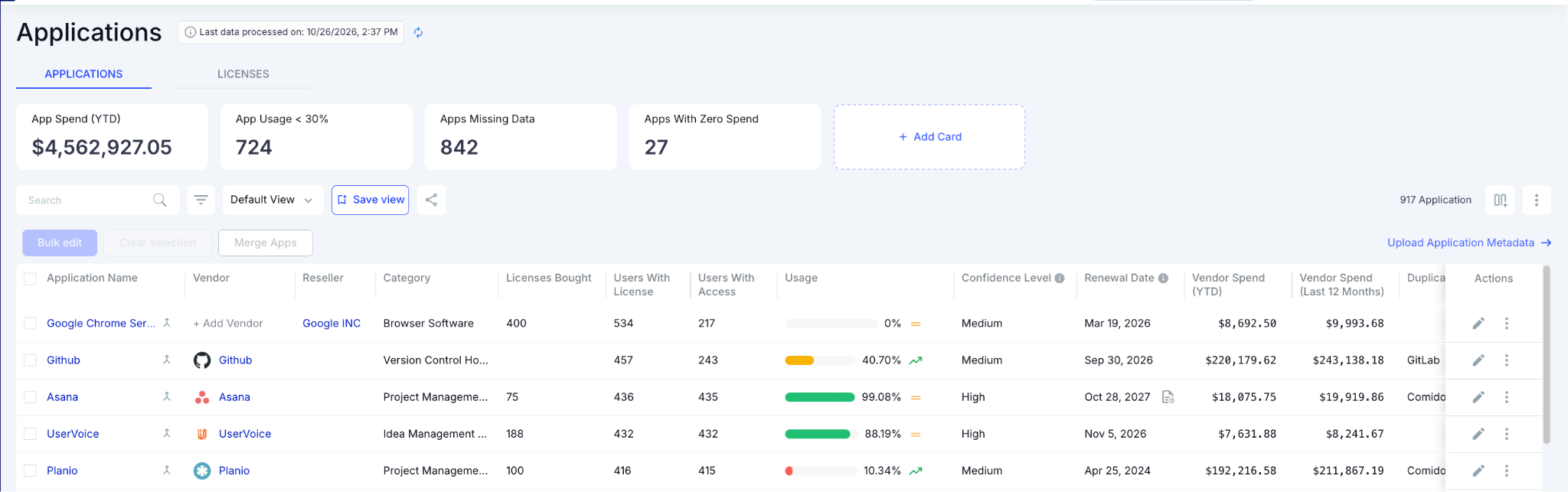
Every app lands in one inventory with its owner, spend, and license count. With the full list in place, the next step is seeing which of those licenses are actually used.
B. See purchased, provisioned, and used licenses side by side
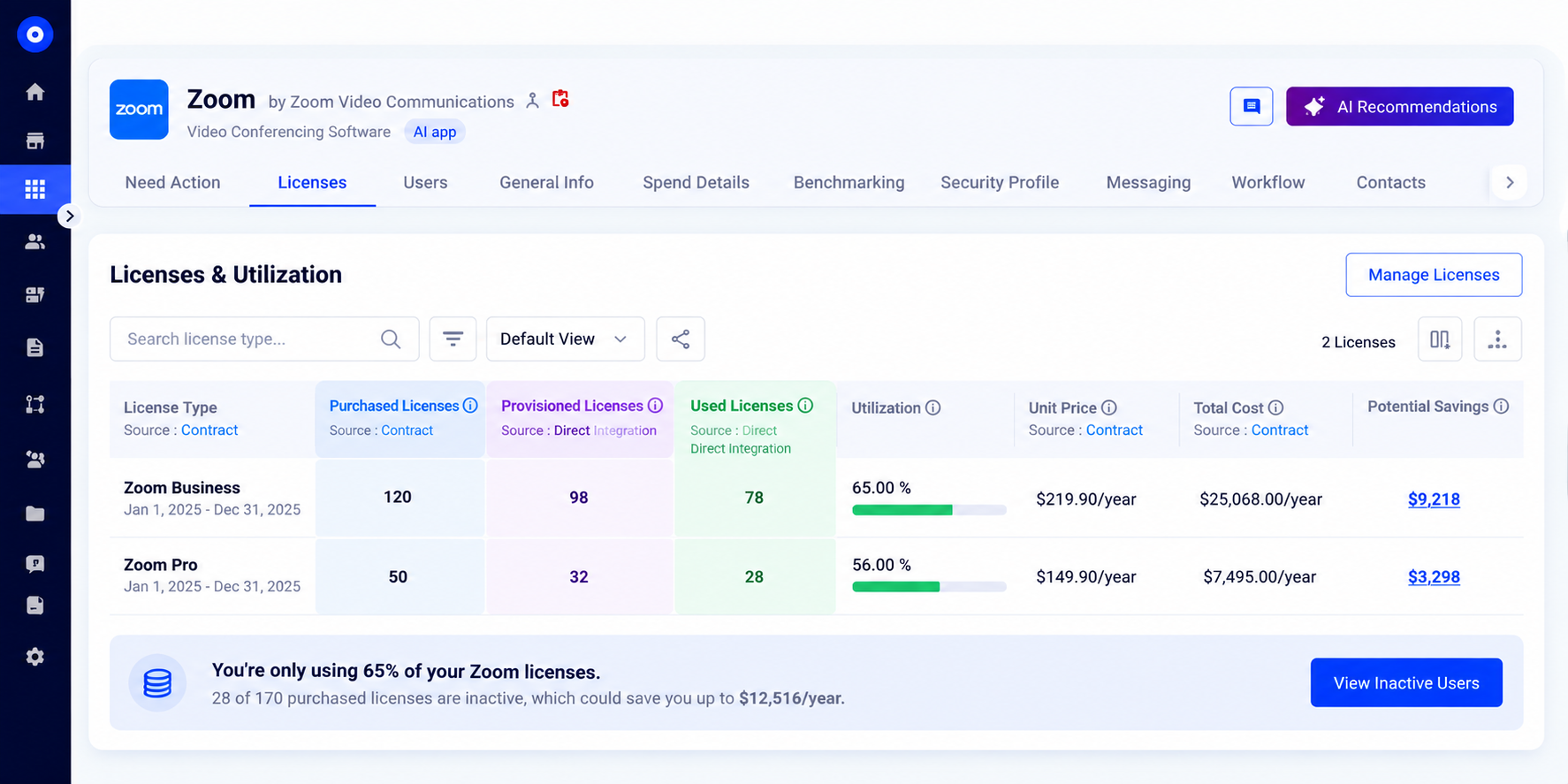
Most teams can tell you how many licenses they bought. Few can tell you how many are assigned and how many are active. CloudEagle.ai shows all three on one dashboard and refreshes the data with nightly syncs for every app, including the ones outside your core stack.
Usage goes deeper than logins. CloudEagle.ai tracks feature activity, roles and license tiers, down to Microsoft 365 E3 versus E5, so a user who signs in and does nothing shows up as idle. Once usage is clear for SaaS seats, the same view extends to AI.
C. Track AI seats and token usage like any other license
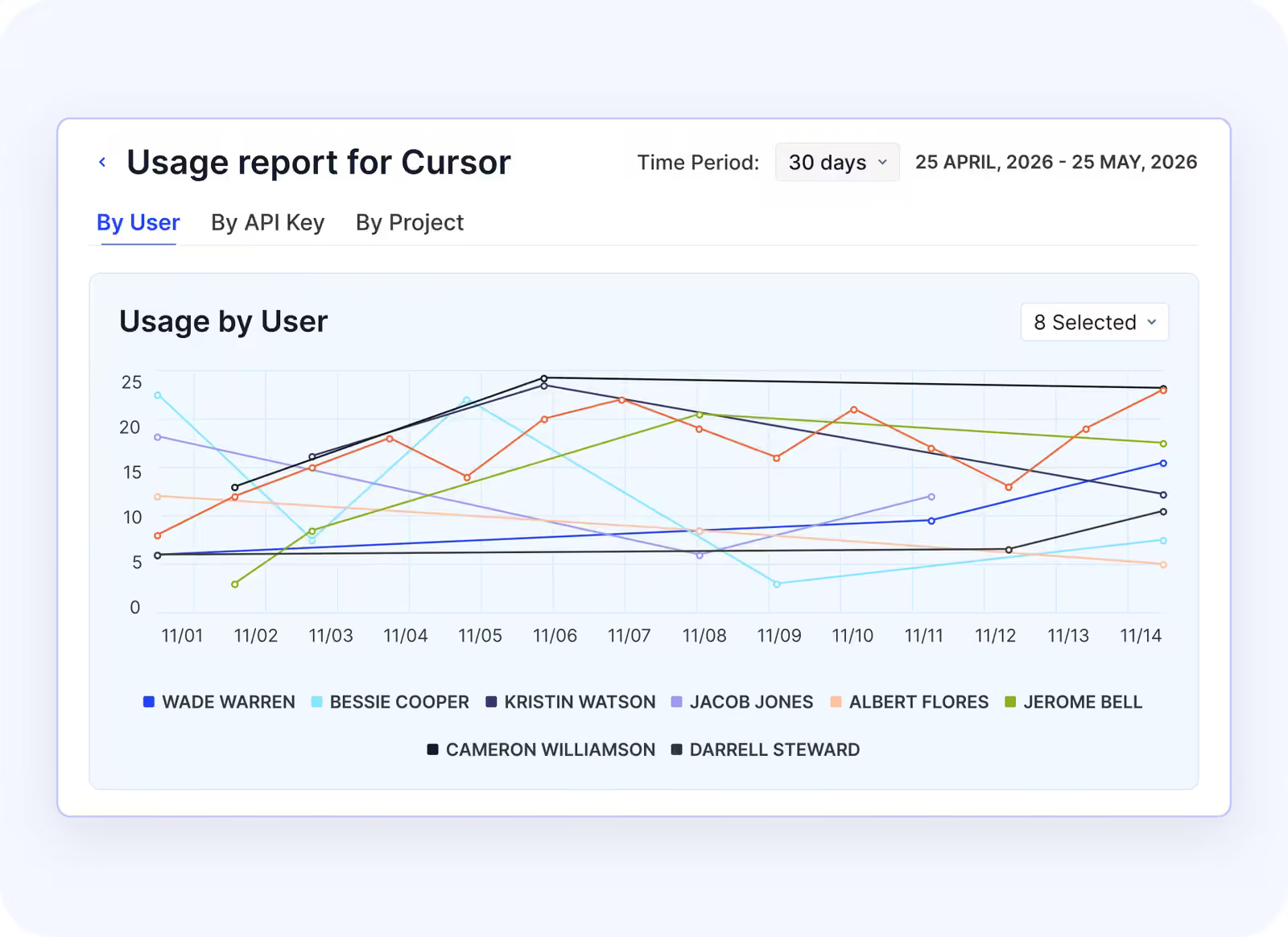
AI licenses behave differently. A ChatGPT Enterprise or Copilot seat costs a flat fee, while API access bills by token, and both grow department by department. CloudEagle.ai's AI usage control tracks AI seats, usage by user and API, and token consumption alongside your SaaS licenses.
That puts AI seat waste and usage-based billing surprises in the same review as idle Salesforce licenses. With waste visible across SaaS and AI, CloudEagle.ai moves to reclaiming it.
D. Reclaim idle seats with scheduled harvesting
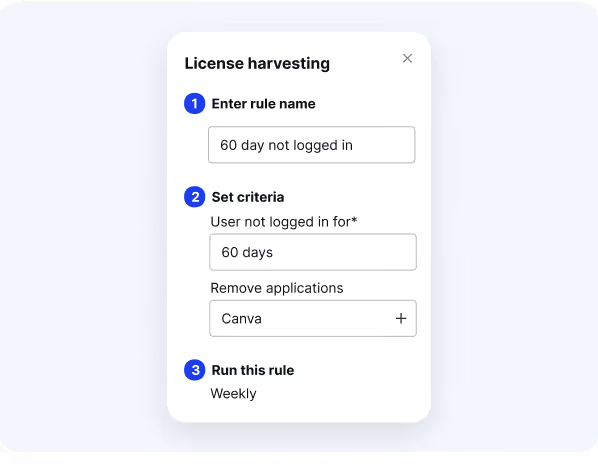
Finding unused licenses saves nothing until someone reclaims them. CloudEagle.ai runs license harvesting on a weekly or monthly schedule against an inactivity threshold you set, such as 30 or 60 days.
Inactive users get an email first, and seats are reclaimed only from those who do not respond, with approval steps your team configures. Reclaimed seats return to the pool so the next hire draws from what you already own. RingCentral used this to cut time and cost in license harvesting. Some active users still sit on the wrong plan, which is the next fix.
E. Move users to the right license tier
Premium tiers are where quiet overspend builds up. CloudEagle.ai maps feature usage to license tiers and flags users paying for capabilities they never touch, so you can downgrade them through the same workflows.
This is how teams catch a license tier nobody actually needs before it renews for another year. With seat count and tier corrected, the renewal itself becomes the lever.
F. Right-size contracts before every renewal
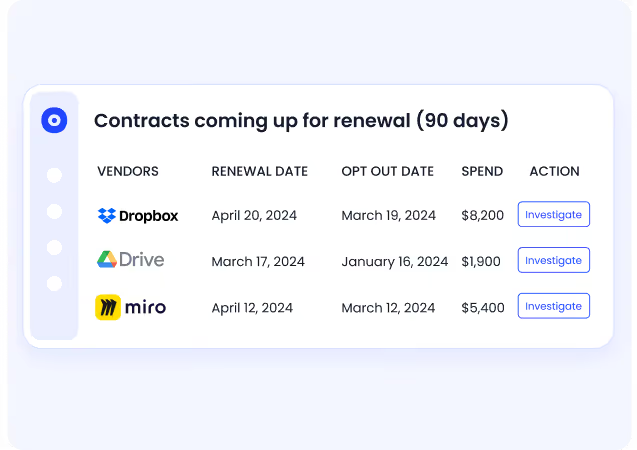
Auto-renewals lock in last year's license count. CloudEagle.ai's renewal calendar alerts owners ahead of each renewal with current usage attached, so the count is reviewed while you still have leverage. AI-powered metadata extraction pulls renewal dates and terms from your contracts automatically.
Price benchmarking shows what peers pay for the same tool, and it needs no contract upload from you. That combination is how teams cut unused SaaS licenses before renewal and negotiate from data. The last step keeps the count accurate between renewals.
G. Return licenses automatically when people join, move or leave
Seats leak every time someone leaves or changes teams. CloudEagle.ai syncs with Workday and other HRIS platforms, so a role change or exit triggers a review of the licenses tied to that person through employee onboarding and offboarding workflows.
New hires get the right licenses on day one, and leavers' seats go back to the pool. Rec Room replaced spreadsheet-based license tracking with this centralized view.
Limitations: Teams looking only for on-prem software license compliance for publishers like Oracle or IBM may want a dedicated SAM tool alongside it. CloudEagle.ai integrates with ITAM tools such as Flexera rather than replacing them.
Pricing: Quote-based, by module.
See Every Idle Seat Across Your Stack


2. Zylo
Best for: Finance and IT teams running a spend-led SaaS program that now has to cover AI and usage-based costs.
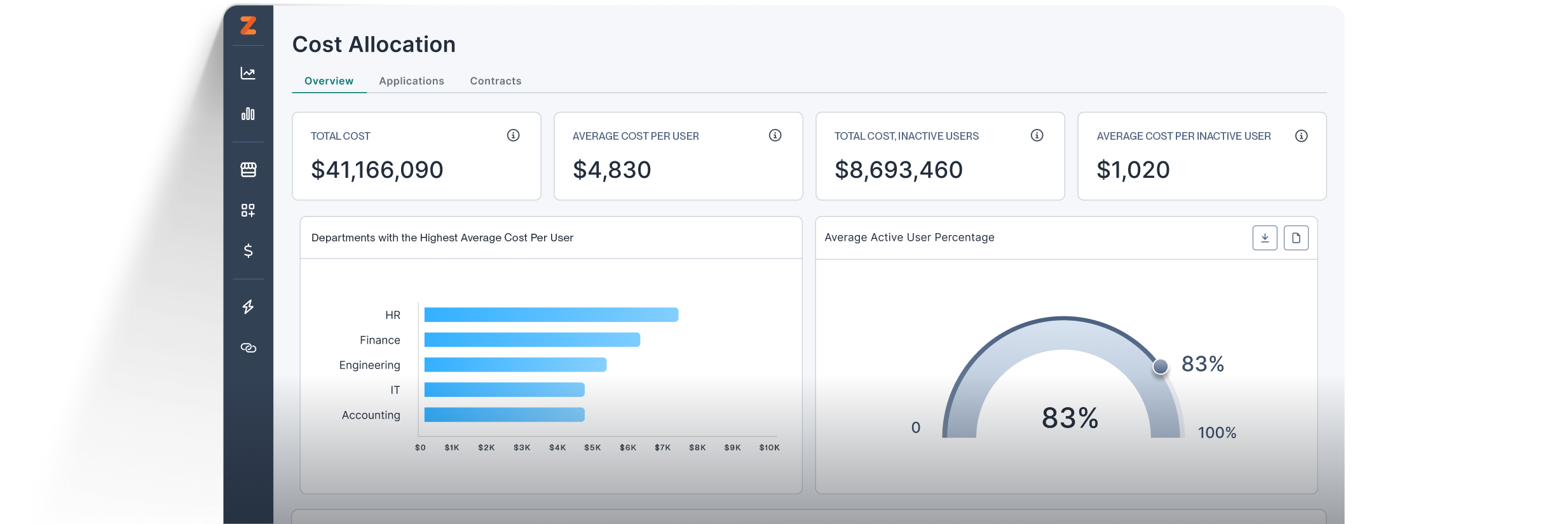
Zylo discovers SaaS apps across finance, SSO and integration data and keeps license, contract and renewal data in one system of record. In April 2026 it added Consumption Cost Management, which brings usage-based AI and data platform bills from providers such as OpenAI, Anthropic, Databricks and Snowflake into the same view as seat-based licenses.
In October 2026 Zylo made Clarity AI, its SaaS management agent, generally available. Clarity finds unused licenses and prepares renewals from plain-language requests, and a Zylo MCP server exposes the same data to outside AI tools.
Key features:
- License utilization tracking with rightsizing recommendations
- Consumption Cost Management for AI and usage-based spend, with alerts before commitment thresholds
- Clarity AI agent for license, renewal and workflow requests
- Renewal calendar and contract tracking
Pros:
- Large invoice dataset to support spend analysis
- Seat-based and consumption-based software costs in one view
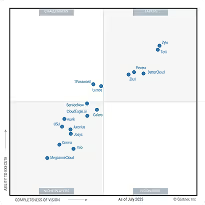
- Named a Leader in the 2026 Gartner Magic Quadrant for SaaS Management Platforms
Cons:
- Consumption cost coverage depends on which providers are integrated
- Access governance, such as user access reviews, is narrower than its spend tooling
See the full CloudEagle.ai vs Zylo comparison.
Pricing: Quote-based. Our Zylo pricing guide breaks down typical annual platform fees.
3. Torii
Best for: IT teams that want SaaS operations automation with AI spend tracking on top.
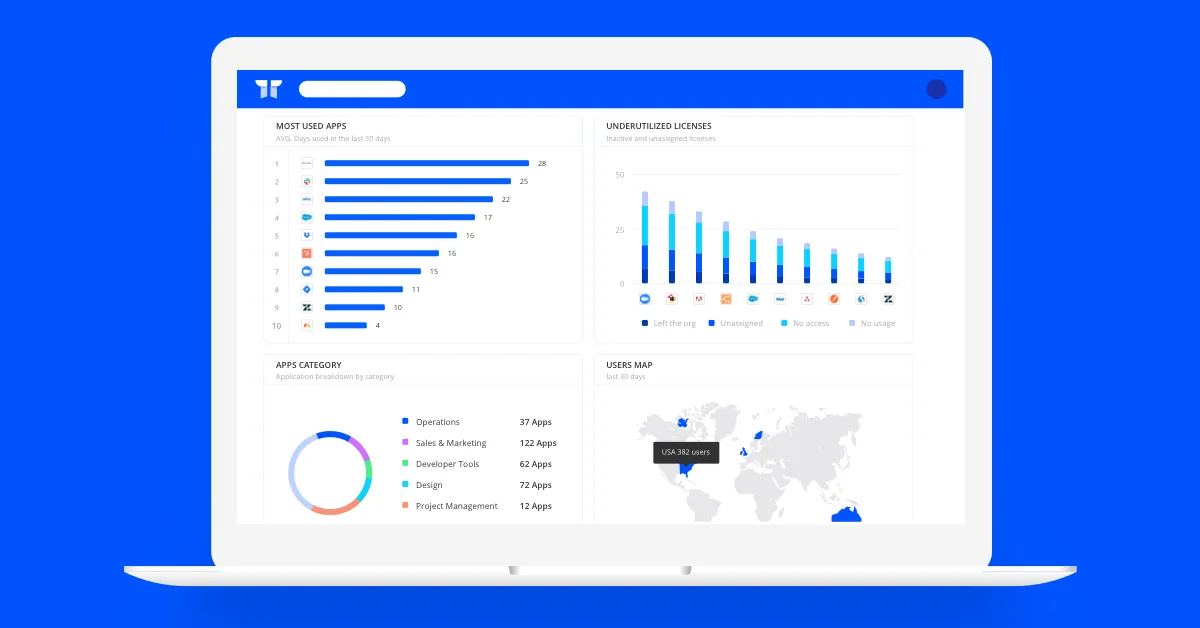
Torii gives IT visibility into SaaS apps, users, owners, licenses and spend, then automates lifecycle tasks such as onboarding, offboarding and license cleanup. In May 2026 it launched an AI Management Platform that consolidates AI activity across models like ChatGPT, Claude and Gemini, app builders like Lovable and Replit, and code assistants like Cursor.
The AI platform tracks spend by user, team, project and model, surfaces the heaviest token consumers and forecasts future AI spend from usage trends.
Key features:
- SaaS discovery with license, user and spend visibility
- No-code workflow automation for lifecycle and license tasks
- AI spend tracking by user, team and model, with overlap detection
- Renewal support and compliance evidence
Pros:
- Strong automation for day-to-day SaaS operations
- AI spend broken down to the user and model level
- Named a Leader in the 2026 Gartner Magic Quadrant for SaaS Management Platforms
Cons:
- Price benchmarking and negotiation support are outside its core
- Identity governance depth is lighter than dedicated IGA platforms
Pricing: Quote-based.
4. Zluri
Best for: Teams that want SaaS license tracking inside an identity security platform.
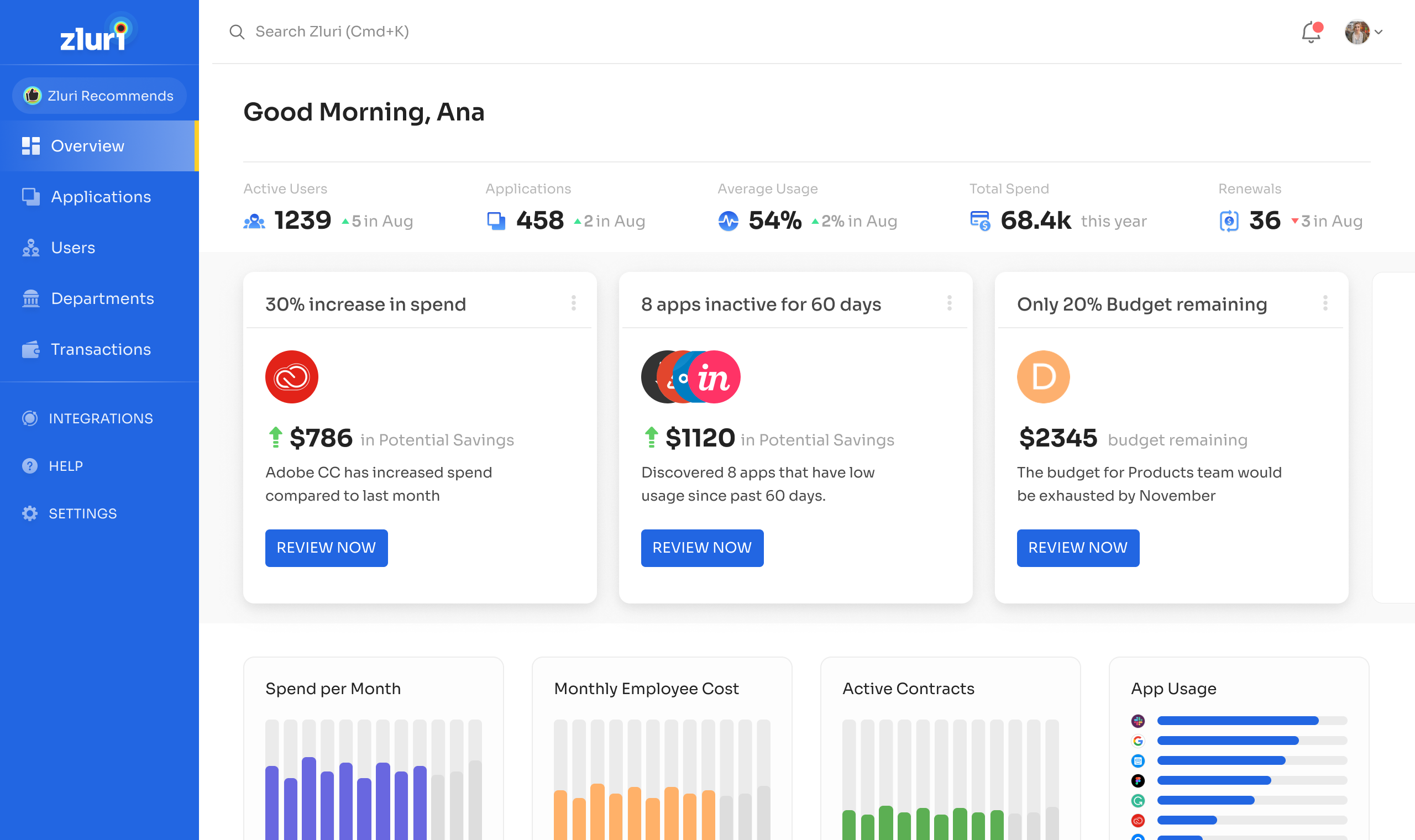
Zluri gives a view of SaaS apps, users, licenses and spend in one place, with renewal reminders and automated provisioning and deprovisioning. In March 2026 it expanded into an identity security platform that discovers employees, service accounts and AI agents across SaaS and cloud, then flags risky access.
Research and advisory firm Infotech acquired Zluri in October 2026. Zluri continues as "Zluri. An Infotech company," and its discovery and IGA products become core modules of Infotech's CIO Analytics platform.
Key features:
- SaaS inventory covering licenses, subscriptions and contracts
- Identity discovery across human, service account and AI agent identities
- Joiner, mover and leaver workflows with access policies
- Usage monitoring and renewal tracking
Pros:
- License data and access governance in one product
- Covers non-human identities, including AI agents
Cons:
- The roadmap now centers on identity security and Infotech's analytics platform, so check spend optimization and benchmarking depth
- The ownership change is recent, so confirm product and support plans during evaluation
Pricing: Quote-based, by module. Our Zluri pricing guide covers the details.
5. BetterCloud
Best for: IT teams that want no-code automation for SaaS operations.
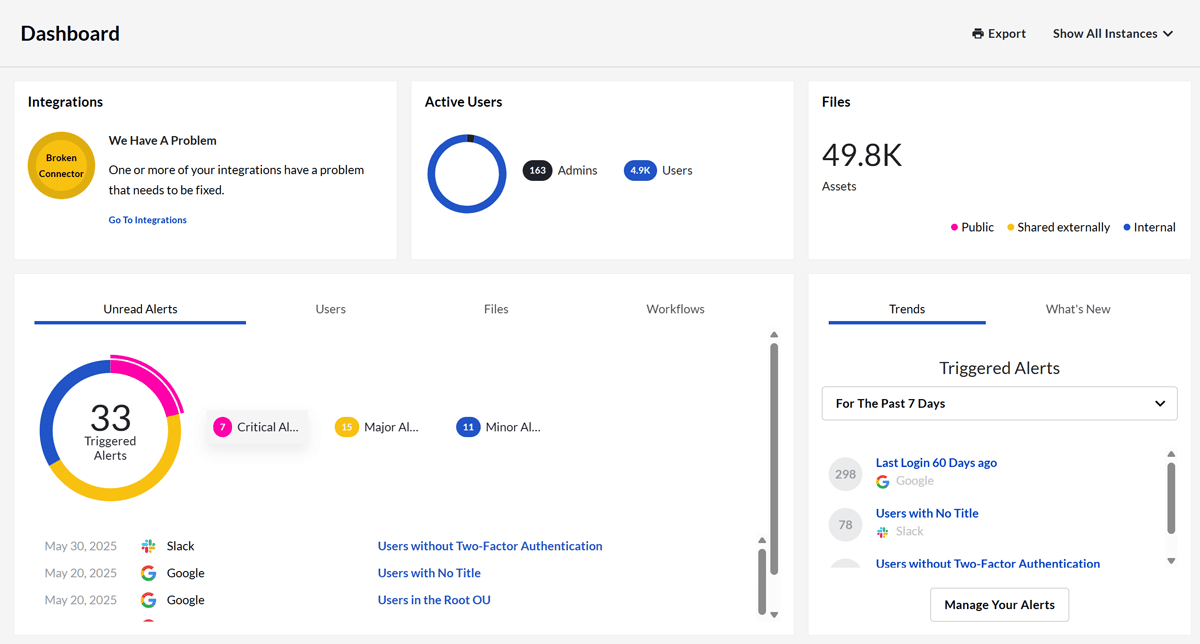
BetterCloud centers on SaaSOps workflows. It automates onboarding, offboarding and license reclamation across connected apps, and flags unused licenses and overlapping tools.
Cloud governance company CoreStack acquired BetterCloud in March 2026. In June 2026 BetterCloud released an AI-native version of its platform with an IT Agent that takes natural-language requests under human review, a Data Explorer for reporting and an Activity Hub that audits both human and agent actions.
Key features:
- No-code workflow automation for SaaS tasks
- License reclamation and reassignment workflows
- BetterCloud IT Agent with human-in-the-loop oversight
- Activity Hub audit log and Data Explorer reporting
Pros:
- Mature automation library for SaaS user lifecycle tasks
- Agent actions are logged and permissioned alongside human admins
Cons:
- Price benchmarking and procurement orchestration are outside its core
- Integration with CoreStack's cloud governance is still taking shape after the acquisition
See CloudEagle.ai vs BetterCloud.
Pricing: Quote-based.
6. Flexera One (including Snow)
Best for: Large enterprises managing on-prem, cloud and SaaS licenses in one estate.
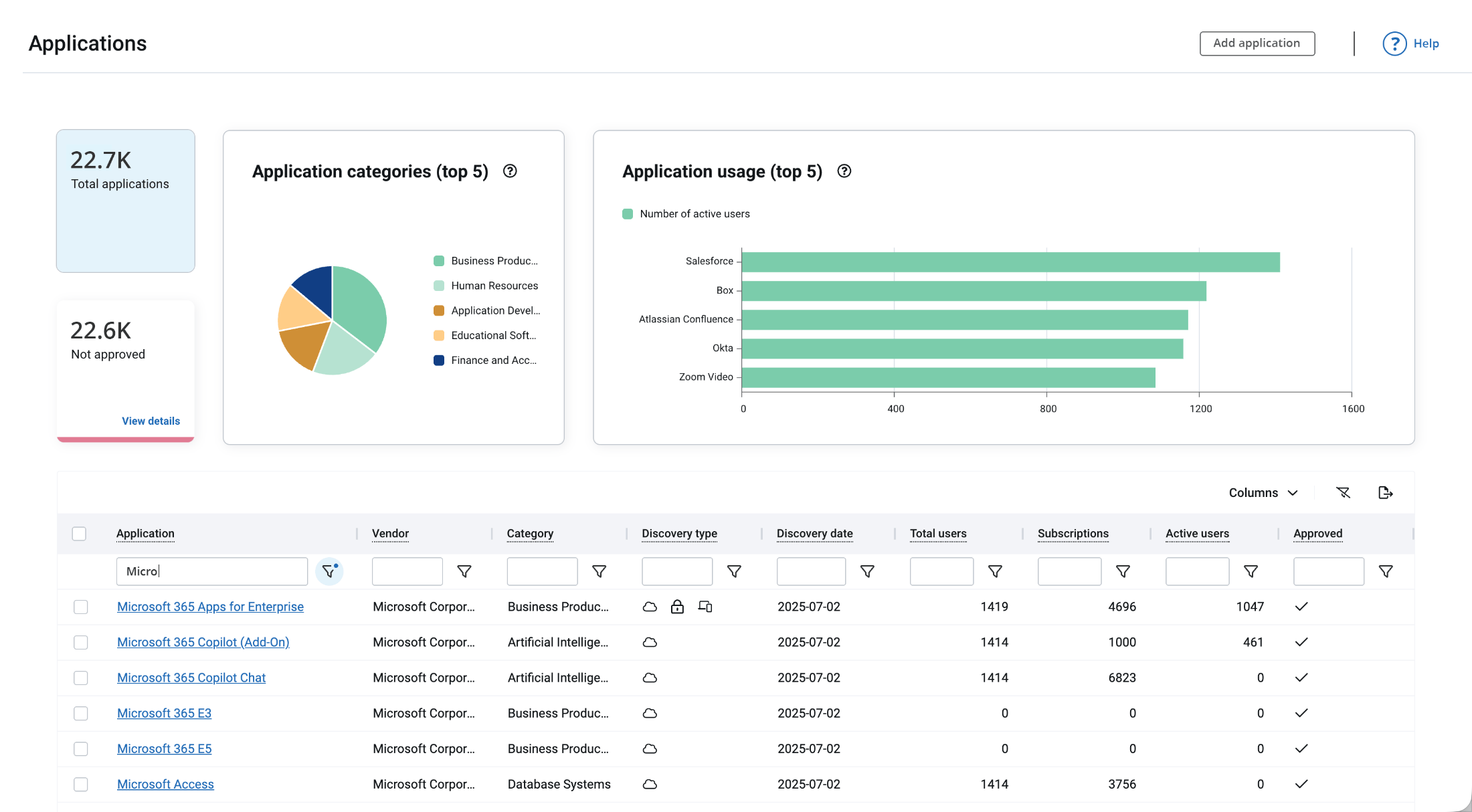
Flexera acquired Snow Software in February 2024 and merged the Flexera and Snow SaaS management products into Flexera One SaaS Management. It discovers SaaS and AI apps through browser, financial, SSO, CASB and agent data, and its API integrations with Microsoft 365, Salesforce and ServiceNow show license detail and recommend tier downgrades based on actual usage.
In June 2026 Flexera added AI Cost Management, which tracks consumption-based AI costs across applications, agents, models and data platforms, with a plain-language FinOps Assist.
Key features:
- License compliance and audit readiness for major publishers
- Hybrid discovery across endpoints, data centers, cloud and SaaS
- Shadow AI discovery and AI cost management
- Underutilized license and tier downgrade recommendations
Pros:
- One vendor for software asset management, SaaS and cloud FinOps
- Deep publisher licensing coverage for audits
- Named a Leader in the 2026 Gartner Magic Quadrant for SaaS Management Platforms
Cons:
- Built for hybrid ITAM, so SaaS-only teams may find rollout heavier than they need
- Feature-level license detail centers on a set of major apps
Pricing: Quote-based.
7. ServiceNow Software Asset Management
Best for: Enterprises already running ITSM on the ServiceNow platform.
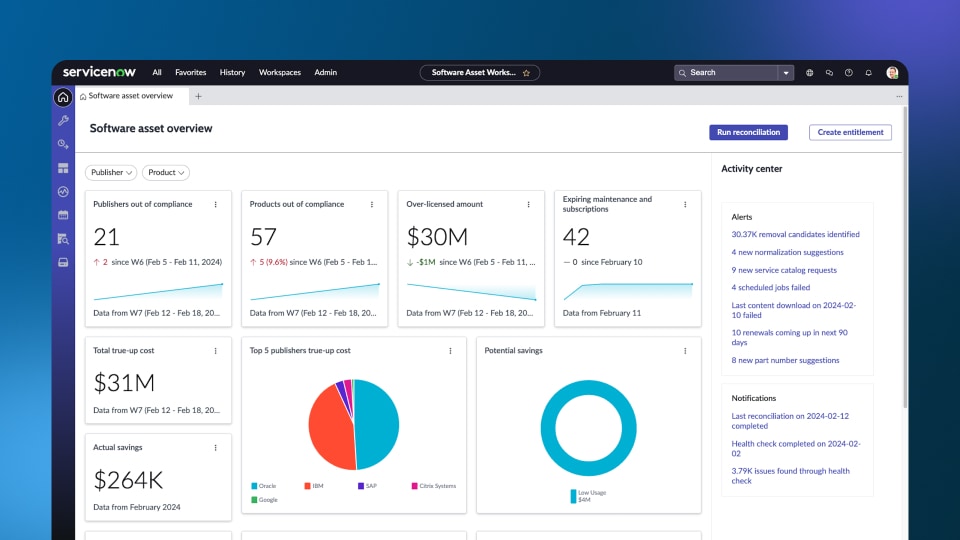
ServiceNow Software Asset Management tracks software and SaaS licenses inside the Now platform, tying license records to CMDB data and ITSM workflows. Its Australia release in 2026 added Now Assist for SAM, which extracts entitlement data from contracts, uses AI agents to diagnose and fix SaaS connector errors and assigns Microsoft 365 licenses automatically after a request is approved.
Key features:
- Publisher-specific license compliance for Microsoft, Oracle and SAP
- SaaS license tracking through platform integrations
- Now Assist AI for contract entitlements and connector fixes
- Workflows linked to ITSM, CMDB and contract management
Pros:
- License data sits next to service, asset and request workflows
- Strong on complex on-prem licensing rules
Cons:
- Value depends on an existing ServiceNow footprint
- SaaS usage depth relies on the integrations you configure
See CloudEagle.ai vs ServiceNow.
Pricing: Quote-based, usually added to an existing ServiceNow contract.
8. AssetSonar
Best for: Small and mid-sized IT teams tracking hardware and software licenses together.
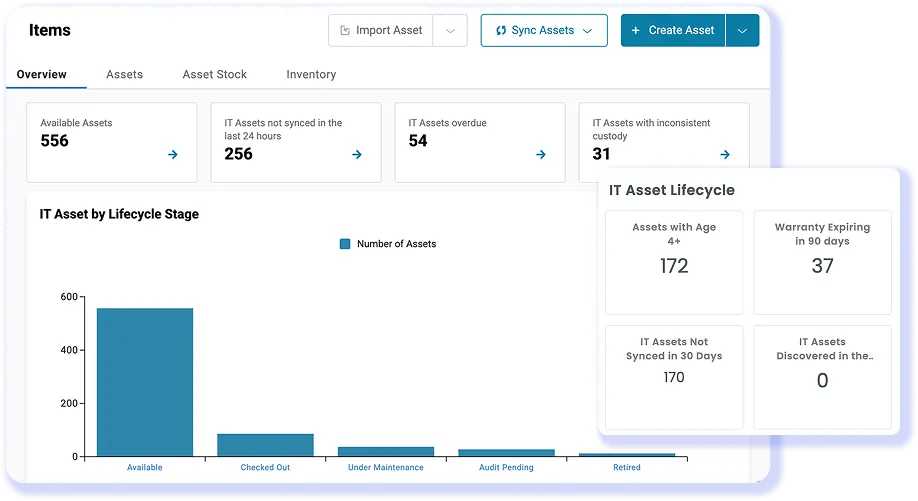
AssetSonar by EZO is an IT asset management tool. Its software asset management add-on covers software discovery, a browser plugin for Chrome and Edge, license allocation, compliance monitoring, license reclamation and renewal alerts.
Key features:
- Software discovery and a unified software catalog
- License allocation, optimization and reclamation
- Renewal and expiry alerts
- Integrations with Okta, Microsoft Entra ID, Intune, Jamf and Jira Service Management
Pros:
- Hardware and software assets in one lightweight system
- Reviewers rate its support and custom fields highly
Cons:
- SaaS usage data is shallower than dedicated SaaS management platforms, and AI license coverage is limited
- Reviewers report setup trial and error and limited reporting filters
Pricing: Published per-asset plans, with SaaS management in an add-on bundle; check the vendor site for current rates.
How to Choose SaaS License Management Software
The right SaaS license management tool is the one that turns license data into reclaimed seats and smaller renewals. Check these criteria when you compare software license management solutions:
- Usage beyond logins: A login does not prove a seat is earning its cost. Look for feature-level activity, roles, and tier data.
- Coverage of every license type: Your stack mixes per-user, tiered, usage-based and concurrent licenses, plus AI seats and token-based billing. The tool should track all of them in one view.
- AI license management: Check whether it discovers AI apps and tracks AI seats and token consumption, or only traditional SaaS.
- Reclamation with approvals: Automated license management should notify users and route approvals before removing a seat, so nobody loses access they need.
- HR and SSO integration: SaaS license management software with HR integration returns seats automatically when people leave or change roles.
- Renewal right-sizing: Renewal alerts should arrive with usage attached, early enough to change the count.
- Price benchmarking: Peer pricing data turns a renewal into a negotiation.
- Integration breadth: Count direct integrations across SaaS, AI, SSO, HRIS and finance. A cloud-based software license management tool is only as accurate as the data it can reach.
- Time to value: Ask how long until the first savings report, in days.
Why Do Businesses Need SaaS License Management Software?
Managing software licenses by spreadsheet breaks once a company runs more than a few dozen apps. Software license management software fixes three problems spreadsheets cannot.
- License waste compounds quietly: Seats stay assigned after people leave, premium tiers go unused, and duplicate tools overlap. Gartner forecasts worldwide software spending of about $1.44 trillion in 2026 (Gartner, April 2026), so even a small waste rate is a large number.
- AI licenses scale faster than SaaS ever did: Copilots and AI assistants roll out department by department, often without central review, and token-based billing scales with use. License management now has to cover AI seats and token spend.
- Renewals lock in yesterday's numbers: Without usage data at renewal time, contracts roll over at the old license count. Missed renewals and auto-renewals at unfavorable terms are the most common avoidable cost.

Conclusion
The best SaaS license management software in 2026 manages SaaS and AI licenses from real usage, reclaims seats with your approval rules, and right-sizes every contract before it renews. Point tools handle parts of that, and hybrid SAM suites cover on-prem estates well.
CloudEagle.ai covers the full workflow in one command center for SaaS, AI, and identity governance, with 10–30% savings on SaaS and AI spend. Book a demo to see your license waste in your own data.
Frequently Asked Questions
1. Is a spreadsheet or free software license management tool enough?
A spreadsheet works for a handful of apps. Past that, it cannot see real usage, chase renewals or reclaim seats, so it records waste without reducing it. Free tools usually track license counts only, without usage data or harvesting workflows.
2. How is SaaS license management software different from SAM tools or license servers like Reprise?
License servers such as Reprise License Manager let software publishers control floating licenses for their own products. SAM tools manage installed and on-prem software for compliance. SaaS license management software focuses on subscription apps and their usage, spend, and renewals, and works alongside SAM tools.
3. Can license reclamation run automatically without breaking anyone's access?
Yes, when it runs through approvals. Good tools notify inactive users first, reclaim seats only from those who do not respond, and let you set exception rules for critical roles. That keeps automated SaaS license reclamation safe for production teams.
4. Does SaaS license management software track AI licenses like ChatGPT Enterprise and Copilot?
Some do; many do not. Check whether the tool discovers AI apps, tracks AI seats by user, and monitors token consumption for API-billed tools. CloudEagle.ai covers all three through AI usage control.
5. Which SaaS license management software integrates with HR systems?
CloudEagle.ai, Zluri, and BetterCloud connect to HRIS platforms such as Workday. With that link, a role change or exit triggers a license review automatically instead of waiting for a ticket.
6. What is the best license management platform for large organisations?
For enterprises running mostly SaaS and AI, choose a platform with usage beyond logins, 500+ integrations, and renewal right-sizing, such as CloudEagle.ai. For estates with heavy on-prem publisher licensing, pair it with a SAM suite such as Flexera or ServiceNow SAM.
See Your License Waste in Your Own Data