%201.svg)


HIPAA Compliance Checklist for 2025

According to a Deloitte study, 87% of organizations have faced a disruptive incident with a key supplier in the past 24 months. That’s not a minor operational hiccup. It’s lost revenue, delayed launches, compliance exposure, and reputational damage.
Yet many teams still rely on spreadsheets, manual vendor reviews, and fragmented compliance tools to manage supplier risk. In a world of global supply chains, stricter regulations, and rising third-party cyber threats, that approach simply doesn’t scale.
This is where supplier risk management software, also known as supplier risk and performance management software, becomes critical. These platforms help you continuously assess vendor risk, monitor compliance posture, track performance, and respond before small issues turn into major disruptions.
In this guide, we reviewed the top supplier risk management software tools for 2026, comparing features, compliance coverage, integrations, and pricing so you can choose the right solution for your organization.
TL;DR
- Supplier risk management software helps identify, assess, and reduce vendor-related risks.
- Key benefits include enhanced compliance, financial risk reduction, and supply chain resilience.
- Look for features like continuous monitoring, compliance tracking, and proactive alerts.
- CloudEagle.ai leads with unified supplier risk, compliance automation, and real-time performance monitoring in one platform.
- Other notable platforms include Sprinto, BitSight, OneTrust, and Vanta.
1. What Is Supplier Risk Management Software? And Why Can't You Manage It With Spreadsheets Anymore?
Supplier risk management software is a solution designed to identify, monitor, and mitigate risks associated with third-party vendors and suppliers.
These tools provide real-time visibility into your supplier ecosystem, assess potential threats, ensure compliance with standards like ISO and SOC 2, and track performance anomalies.
Also known as supplier risk and performance management software, these tools are crucial for managing global supplier networks, especially as third-party risk becomes more prevalent in cloud-based and outsourced environments.
What modern supplier risk tools actually do:
- Continuously monitor vendor risk signals and compliance posture
- Centralize documentation, certifications, and audit trails
- Automate risk scoring and performance tracking
- Flag anomalies or third-party incidents before they escalate
2. How Supplier Risk Management Software Protects Your Business (Before Disruptions Hit)?
A. Reduce Financial and Operational Risks
Supply disruptions, vendor insolvency, or data breaches can hit revenue fast. Supplier risk tools surface early warning signals before damage compounds.
They help you:
- Monitor vendor financial health
- Track security posture changes
- Detect delivery or operational instability
B. Improve Compliance and Audit Readiness
With regulations like GDPR, SOC 2, and ISO 27001 in play, compliance audit tracking and supplier risk management go hand-in-hand.
These platforms enable you to:
- Automate evidence collection
- Track policy adherence across vendors
- Generate audit-ready reports on demand
C. Enhance Supplier Performance
Supplier performance risk management software evaluates vendor SLAs, delivery quality, and collaboration metrics.
Risk tools monitor:
- SLA adherence
- Delivery quality metrics
- Ongoing collaboration benchmarks
D. Boost Supply Chain Resilience
Disruptions from geopolitical changes, pandemics, or natural disasters can cause ripple effects.
Modern platforms support:
- Scenario planning
- Stress testing critical vendors
- Risk concentration analysis across regions and tiers
3. Supplier Risk Management vs Third-Party Risk Management: What’s the Difference?
Many organizations confuse supplier risk management software with third-party risk tools. While they overlap, they serve slightly different strategic purposes.
Understanding the difference helps you choose the right supplier risk and performance management software instead of overbuying or under-scoping your solution.
Here’s how they compare:
Supplier Risk Management focuses on:
- Operational disruptions and delivery failures
- Vendor financial stability
- SLA and performance monitoring
- Supply chain continuity risks
Third-Party Risk Management (TPRM) focuses on:
- Cybersecurity exposure
- Data privacy compliance
- Regulatory risk monitoring
- External threat intelligence

4. Key Features to Look for in Supplier Risk Management Software
A. Risk Assessment Capabilities
Ensure the tool provides configurable risk matrices to evaluate multiple dimensions of vendor risk, including financial, operational, cybersecurity, legal, and environmental.
B. Continuous Monitoring
Modern platforms offer continuous vendor monitoring, which gives real-time updates on changes in vendor status, compliance lapses, or data breaches using AI-driven alerts.
C. Compliance Tracking and Management
Look for integrations with frameworks like ISO, NIST, SOC 2, GDPR, and HIPAA. This enables you to automate compliance documentation and vendor risk scoring.
D. Proactive Risk Detection and Resolution
The software should offer built-in workflows to automatically escalate issues, assign resolution tasks, and track mitigation efforts, making your supplier risk mitigation strategy seamless and agile.
5. Top 9 Supplier Risk Management Software for 2026
Here’s a carefully selected list of top supplier risk management tools to consider for 2026, evaluated on features, usability, compliance support, and integration capabilities.
1. CloudEagle.ai
CloudEagle.ai is a next-generation procurement and supplier risk management software built for modern enterprises navigating SaaS sprawl, compliance complexities, and third-party risk exposure.
It offers a unified platform that combines procurement automation, vendor management, risk intelligence, and compliance governance, making it an essential solution for finance, IT, and procurement leaders.
What sets CloudEagle apart is its ability to provide real-time visibility into vendor compliance and risk while streamlining contract workflows, renewals, spend tracking, and policy enforcement, all in one seamless interface.
CloudEagle doesn't just monitor vendor risks; it mitigates them proactively through automation, data intelligence, and AI-driven insights.
Whether you're managing 50 vendors or 500, CloudEagle ensures your supplier ecosystem stays compliant, cost-efficient, and risk-resilient.
1. Automated Vendor Risk Assessment
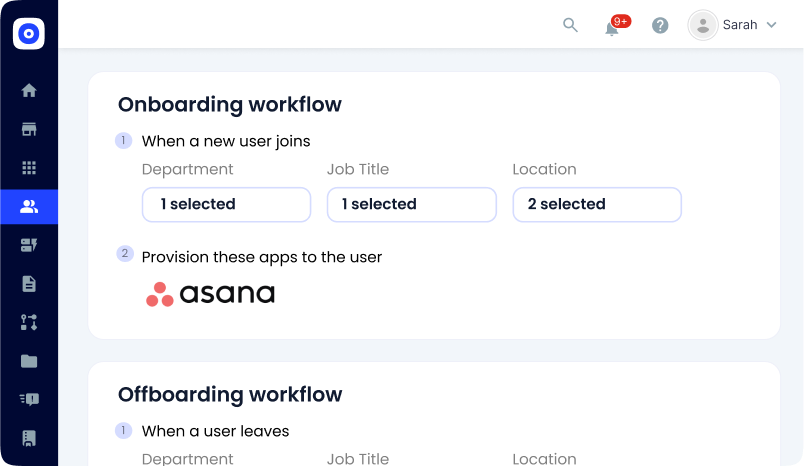
CloudEagle triggers comprehensive vendor risk evaluations at key lifecycle moments, such as onboarding, renewal, or contract changes.
It automatically checks vendors against key benchmarks such as SOC 2, ISO 27001, financial viability, and compliance history. This proactive risk assessment prevents surprises, keeps procurement and security aligned, and ensures only trusted vendors enter your stack.
2. Real-Time Continuous Monitoring
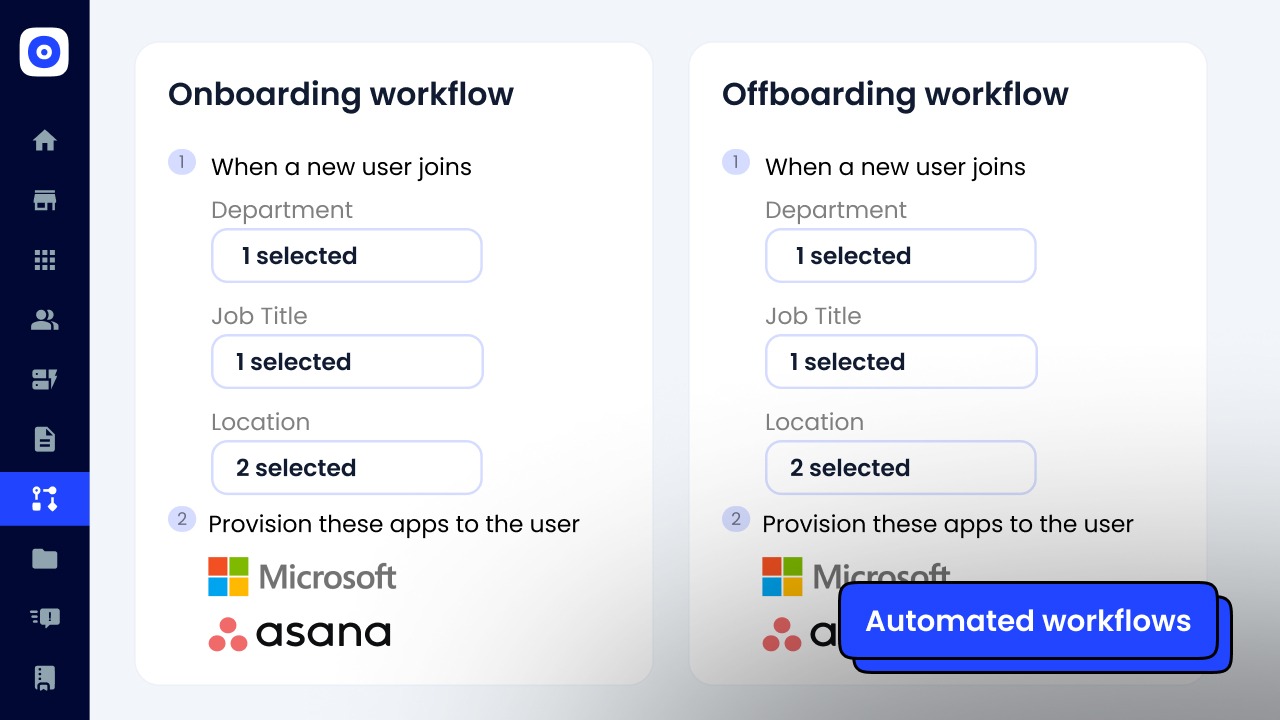
Stay ahead of vendor risks with always-on monitoring. CloudEagle instantly alerts you if a vendor’s certification expires, financials dip, or compliance standing shifts.
This allows security and procurement teams to act fast, whether by freezing renewals, re-evaluating vendors, or triggering internal workflows, before risk becomes exposure.
3. Compliance Framework Integration
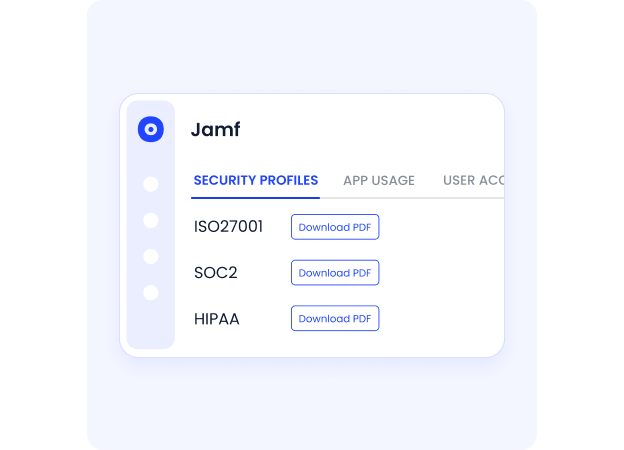
CloudEagle supports all major compliance & governance frameworks like ISO 27001, SOC 2, HIPAA, and GDPR out of the box.
It automates compliance checks, audit readiness reporting, and helps ensure that third-party vendors align with internal and external regulatory mandates, dramatically reducing time and errors during audits.
4. Risk Intelligence Dashboard
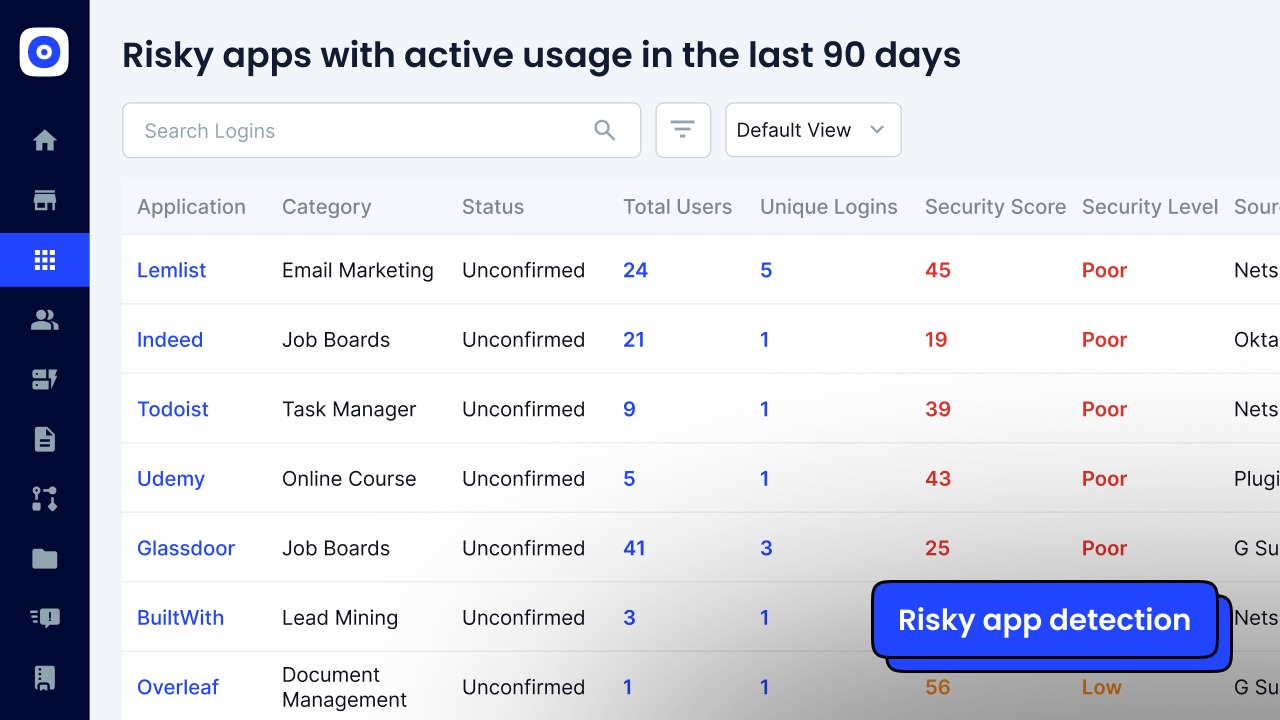
A centralized dashboard visualizes every vendor across multiple dimensions: risk level, compliance posture, renewal timelines, and spend allocation.
With AI-curated risk flags and visual indicators, it enables cross-functional teams to prioritize actions, avoid blind spots, and support strategic decisions from a single source of truth.
5. Procurement & Contract Automation
Built-in procurement automation covers intake, approvals, renewals, and contract validations, including UPLA enforcement.
Teams can route requests through Slack or email, auto-populate vendor metadata, and track every workflow in audit-ready logs, cutting cycle times, reducing errors, and enhancing cross-departmental compliance.
6. AI-Powered Recommendations
CloudEagle analyzes app usage, contract terms, compliance ratings, and vendor performance to recommend smarter choices.
Whether it’s identifying redundant tools, better pricing, or more compliant alternatives, the platform empowers AI procurement leaders to make decisions based on real-time intelligence, not guesswork.
Pros:
- CloudEagle combines SaaS management, compliance automation, and AI-powered procurement into a single platform, helping IT, Security, and Procurement teams eliminate tool sprawl, reduce risk, and drive cost savings.
- Organizations can be up and running in under 30 minutes, thanks to CloudEagle’s 500+ integrations with tools like Okta, NetSuite, Salesforce, and Slack, enabling immediate visibility into apps, licenses, and spend.
- CloudEagle automatically identifies underutilized licenses, duplicate tools, and cost-saving opportunities, delivering 10–30% savings on SaaS spend while reducing operational and compliance risk.
Pricing:
Custom enterprise pricing based on modules and organization size. Quote available upon request.
Your Vendors Are Moving Faster Than Your Controls.


2. Sprinto
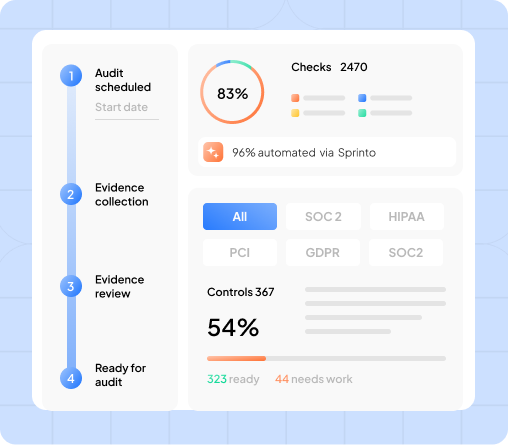
Sprinto is a cloud-based compliance automation platform built for fast-scaling companies aiming to achieve and maintain frameworks like SOC 2, ISO 27001, HIPAA, and GDPR. It’s particularly popular among startups and mid-sized tech firms looking to get audit-ready with minimal manual effort.
Key Features:
- Unified compliance dashboard for real-time visibility into risk and control posture
- Automated vendor risk assessments and continuous monitoring
- Built-in evidence collection and audit trail management
- Support for multiple frameworks simultaneously
- Pre-built risk mitigation templates
- Integrations with cloud tools to streamline end-to-end compliance workflows
Cons:
- Less suited for complex enterprise-level compliance needs.
- Limited flexibility in creating custom control logic.
- Some niche integrations may require manual workarounds.
Pricing:
Sprinto offers custom pricing based on company size and compliance goals. While it doesn’t publicly share pricing, typical plans for SOC 2 readiness start around $5,000–$15,000/year, with additional costs for multi-framework support.
3. UpGuard
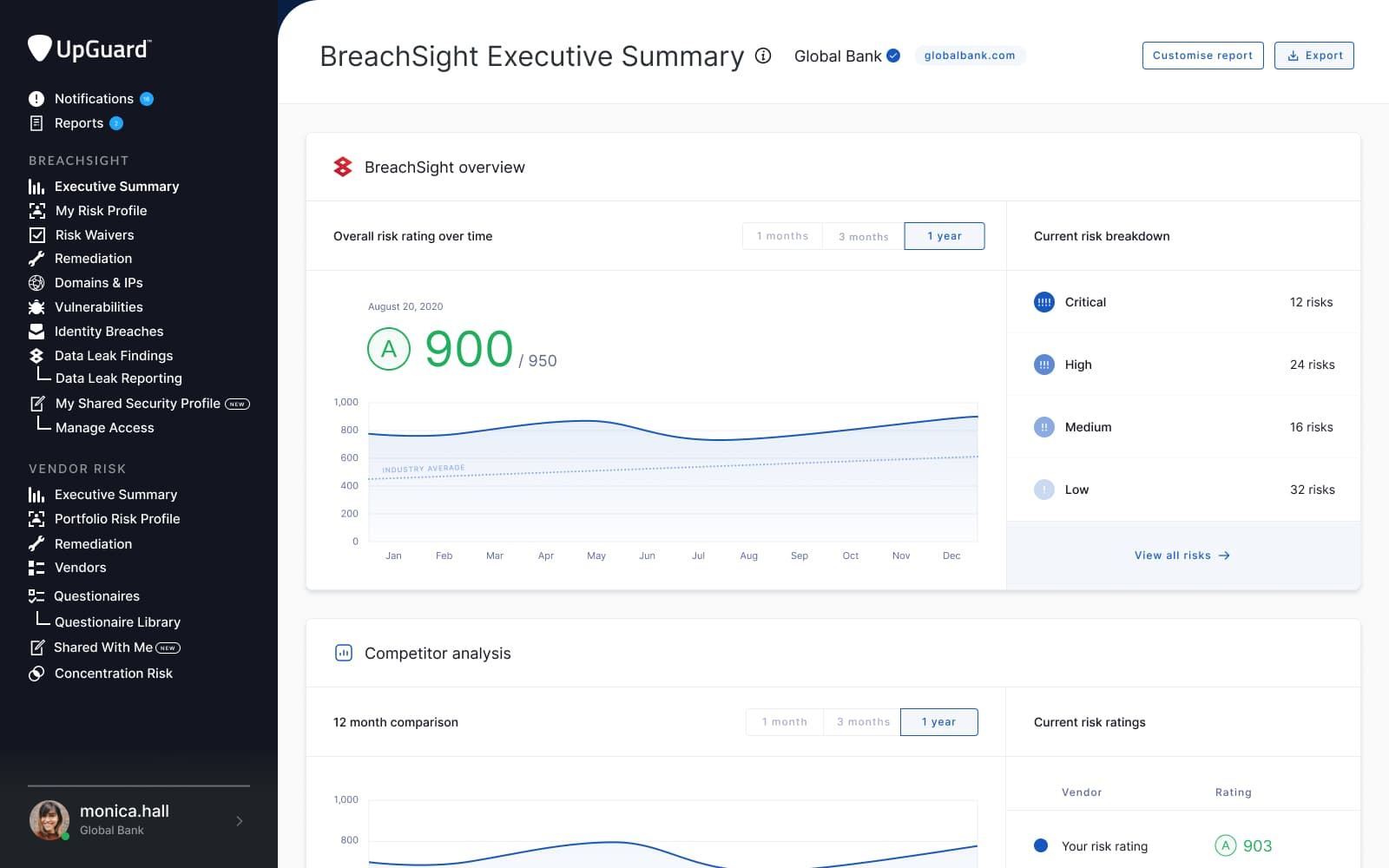
UpGuard is a cybersecurity-focused risk management platform designed to help businesses assess, monitor, and mitigate third-party risks. It’s widely adopted for vendor risk assessments, attack surface monitoring, and breach detection, making it ideal for companies prioritizing external cyber hygiene.
Key Features:
- Cyber risk ratings to assess third-party security posture at a glance
- Real-time breach detection and dark web monitoring
- External attack surface analysis to identify vulnerabilities
- Automated security questionnaires for faster vendor onboarding and reviews
Cons:
- Focuses more on external threats, with less coverage for internal controls.
- Limited support for broader compliance frameworks like SOC 2 or ISO 27001.
- Pricing can become steep as the number of monitored vendors increases.
Pricing:
UpGuard offers tiered pricing based on the number of vendors and features needed. While custom quotes are available, entry-level plans start at approximately $7,000–$10,000/year, with enterprise plans scaling significantly higher based on usage.
4. LogicManager
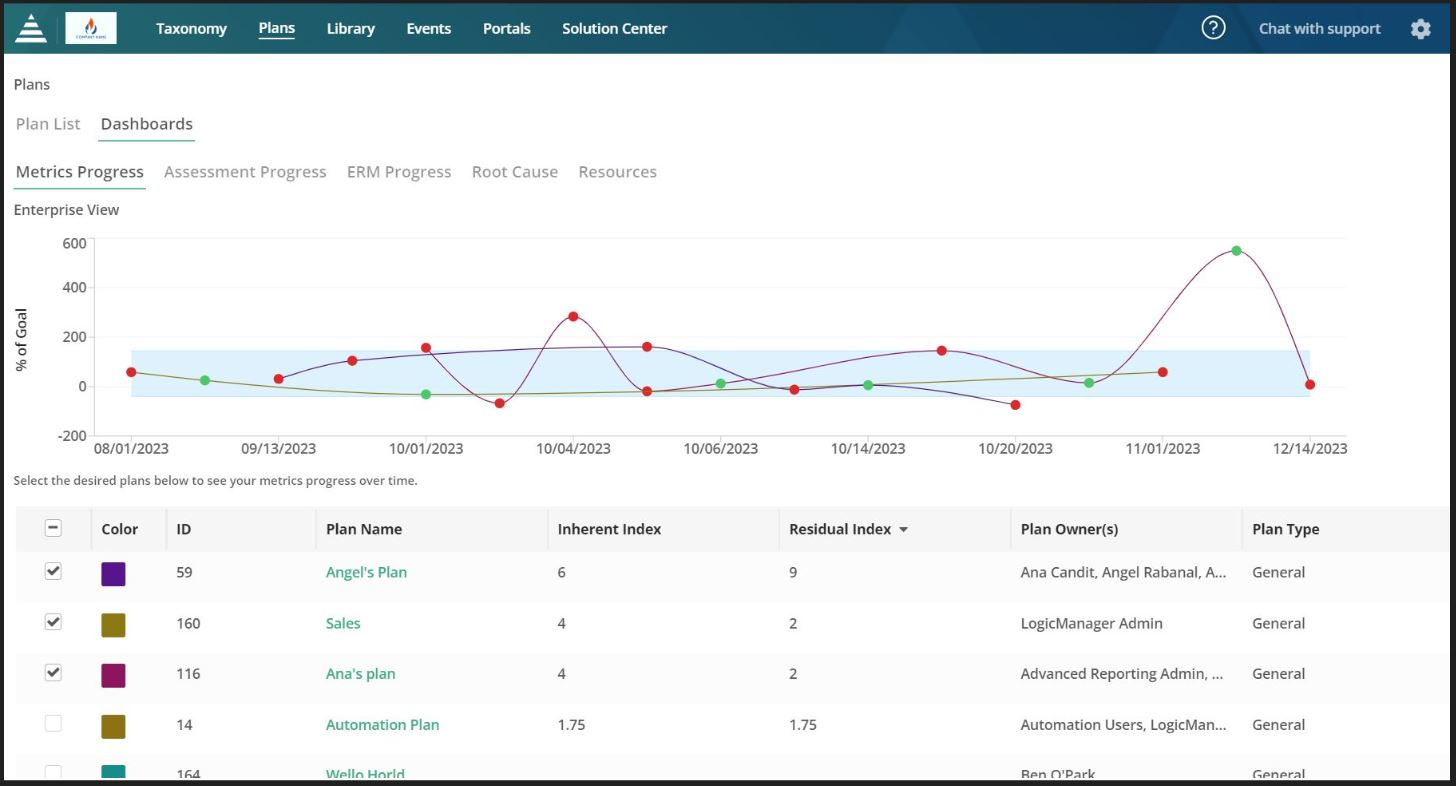
LogicManager is an enterprise-grade supplier risk management software and performance management platform designed to handle a wide range of third-party risks. Known for its flexibility and strong GRC (Governance, Risk, and Compliance) capabilities, it supports organizations in regulated industries to proactively manage vendor risk, performance, and compliance.
Key Features:
- Seamless integrations with ERM and GRC systems for centralized risk visibility
- Customizable vendor assessment forms by risk tier, industry, or business impact
- Continuous regulatory change tracking
- Automated control updates to stay aligned with evolving compliance standards
Cons:
- Steeper learning curve due to the platform’s depth and customization.
- May be overkill for small and mid-sized businesses with limited risk programs.
- Interfaces can feel dated compared to newer, more modern tools.
Pricing:
LogicManager offers custom pricing based on organizational requirements and module selection. While pricing is not publicly listed, enterprise packages typically start around $15,000/year, with scalability based on user count and functionality.
5. Secureframe
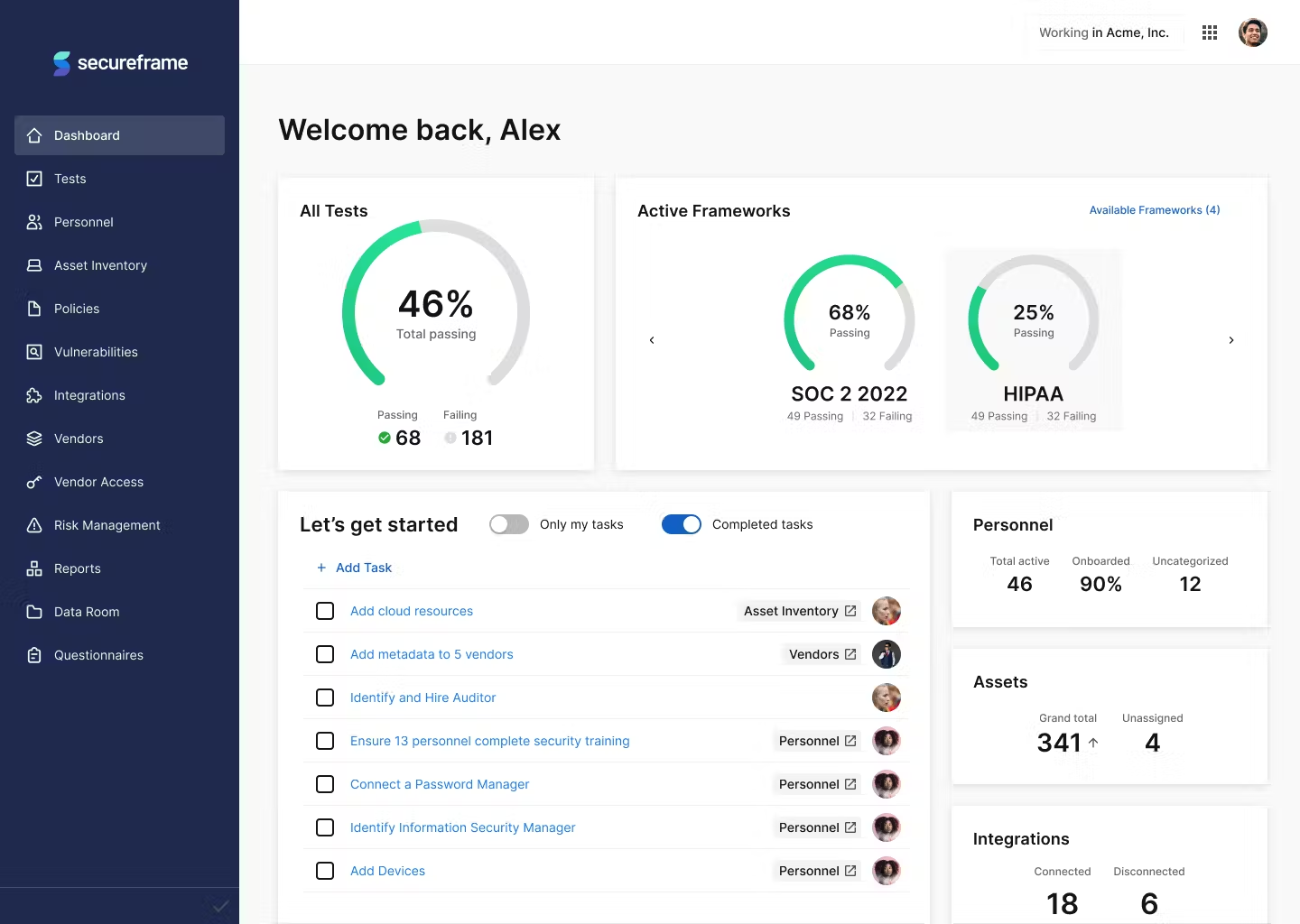
Secureframe is a powerful compliance automation and supplier risk management software platform built for fast-growing tech companies seeking certifications like SOC 2, ISO 27001, and HIPAA. It automates evidence collection and simplifies vendor due diligence to streamline the audit process.
Key Features:
- Automated vendor risk assessments and documentation workflows
- Built-in policy templates to enforce compliance controls
- Real-time tracking of control effectiveness
- Continuous audit readiness across multiple frameworks
Cons:
- Limited flexibility in custom workflows.
- Can get expensive for organizations managing large vendor ecosystems.
- Focuses mainly on compliance rather than broader enterprise risk management.
Pricing:
Pricing starts around $10,000/year, depending on the number of users, frameworks, and vendor integrations required. Custom quotes are provided for advanced packages.
6. BitSight
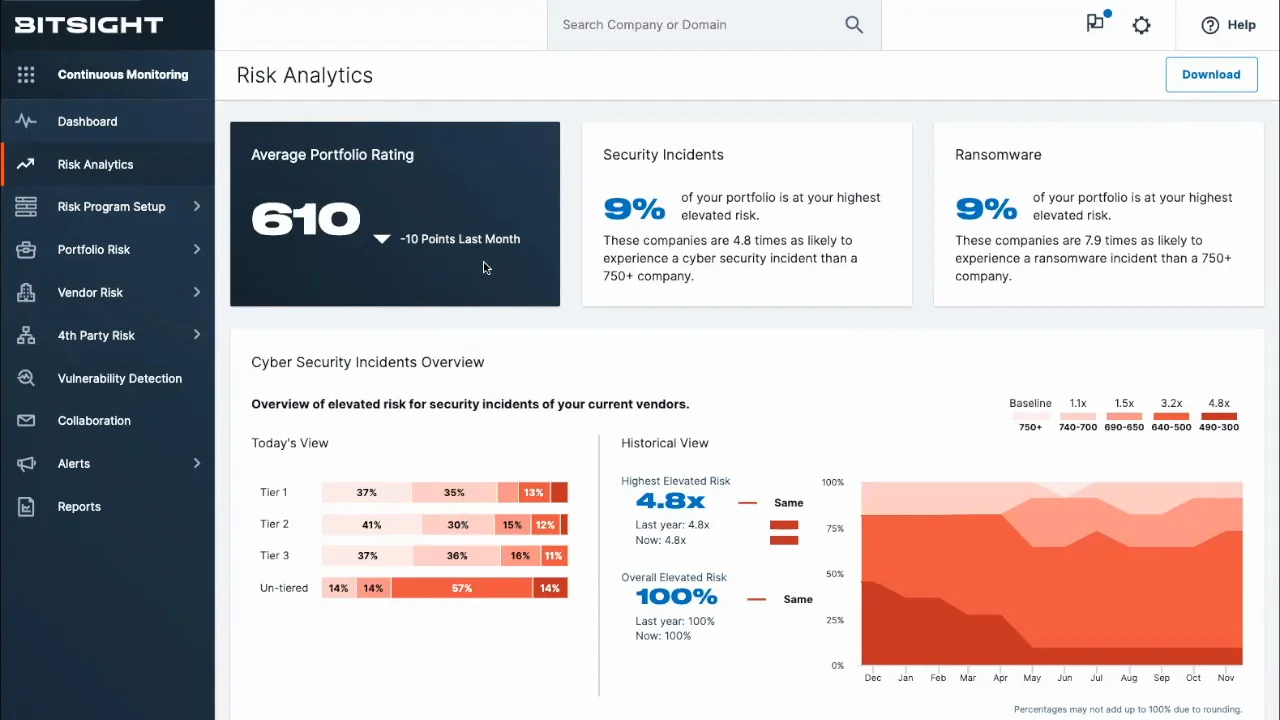
BitSight is a security ratings and supplier risk management software platform that provides continuous monitoring and risk scoring for vendors. It helps businesses quantify cybersecurity risk across global supply chains with external threat intelligence and performance analytics.
Key Features:
- Objective security performance scores for each vendor
- Real-time alerts for new vulnerabilities or breaches
- Continuous monitoring of third-party risk posture
- SIEM integrations to feed risk data into existing security workflows
Pros:
- Clear, actionable scoring model for vendor comparison.
- Excellent global supplier visibility.
- Helps prioritize remediation based on risk impact.
Cons:
- Doesn’t offer in-depth compliance management features.
- Limited visibility into internal controls or documentation.
- Pricing is on the higher end for small teams.
Pricing:
Starts at approximately $20,000/year, depending on the number of vendors monitored and the depth of reporting required. Enterprise plans scale up significantly.
7. Vanta
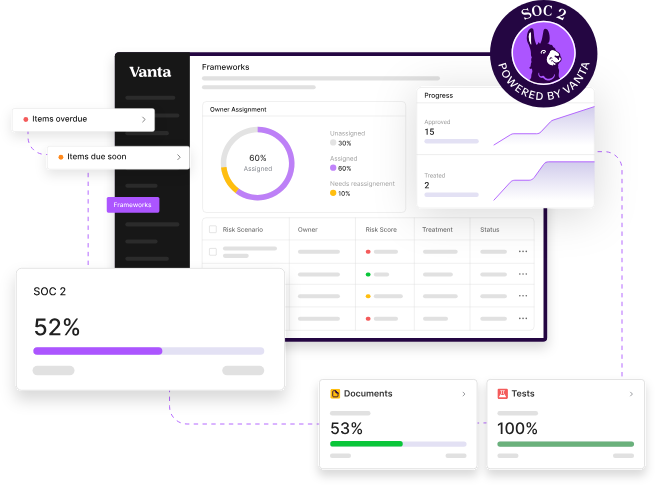
Vanta helps companies achieve SOC 2, ISO 27001, HIPAA, and other compliance standards quickly, with continuous monitoring of vendor security and controls, making it a popular supplier risk management software choice for startups and mid-sized firms looking for a fast path to audit readiness.
Key Features:
- Automated vendor questionnaires and document collection
- Continuous monitoring of vendor compliance status
- Real-time alerts for emerging risks or breaches
- Centralized audit trails and evidence management
- Integrations with cloud and project tools to streamline workflows
Cons:
- Vendor risk management is not as in-depth as dedicated platforms.
- Fewer customization options in templates and workflows.
- May not scale well for highly complex vendor ecosystems.
Pricing:
Pricing starts at around $8,000–$10,000/year, with additional costs for multi-framework support and extended monitoring.
8. OneTrust
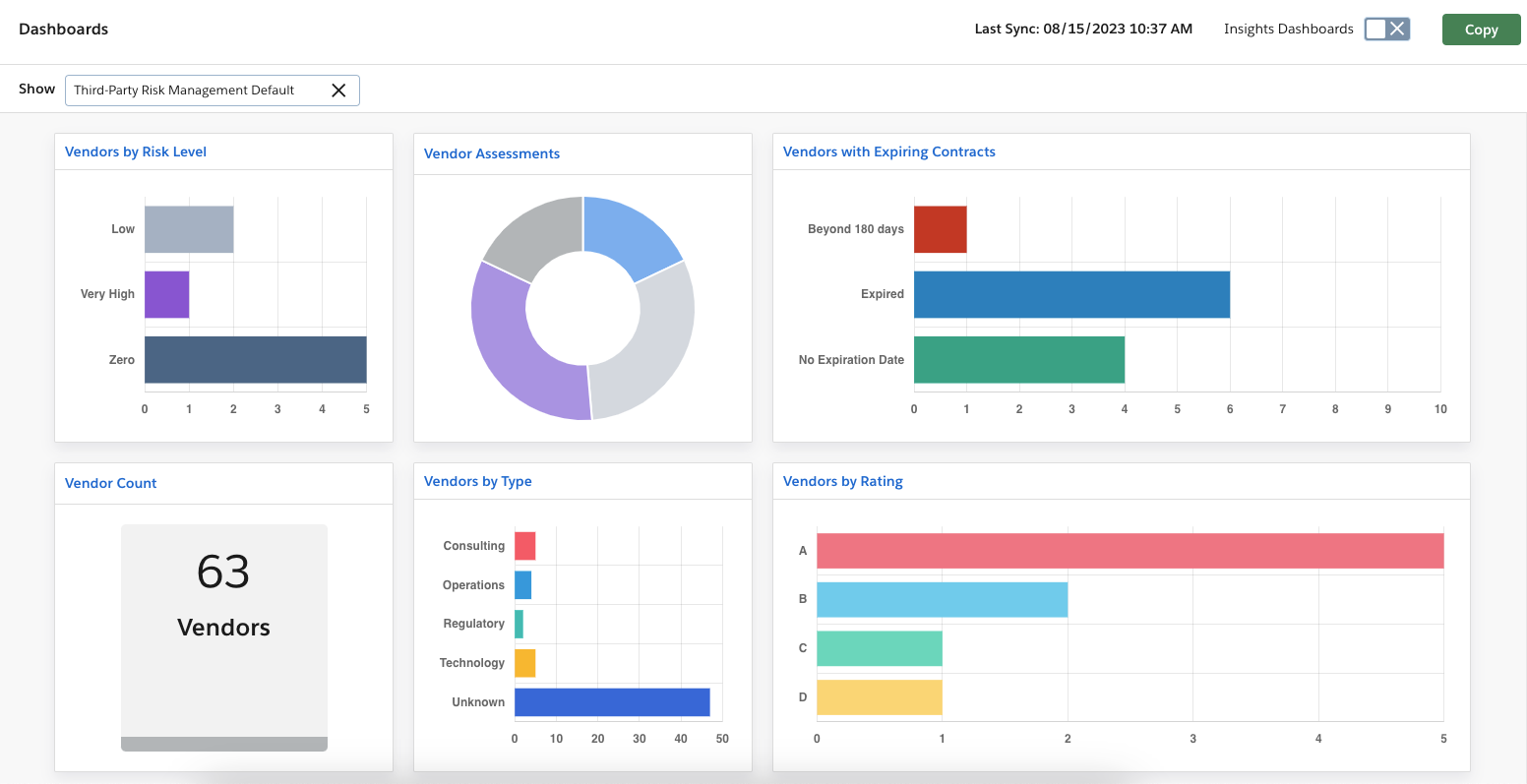
OneTrust is a widely adopted supplier risk management software that combines vendor risk management, data privacy compliance, and ESG tracking. It’s ideal for large enterprises handling complex third-party relationships and regulatory obligations across regions.
Key Features:
- End-to-end third-party lifecycle management, from onboarding to offboarding
- Automated risk scoring and continuous monitoring
- Built-in privacy governance for GDPR and CCPA alignment
- ESG assessment modules for sustainability and ethics oversight
Cons
- Complex platform with a steeper learning curve.
- Costly for mid-sized organizations.
- May feel overwhelming if used only for vendor risk.
Pricing:
Enterprise-level pricing varies widely but typically starts at $30,000/year or more, depending on the modules and user base.
9. MetricStream
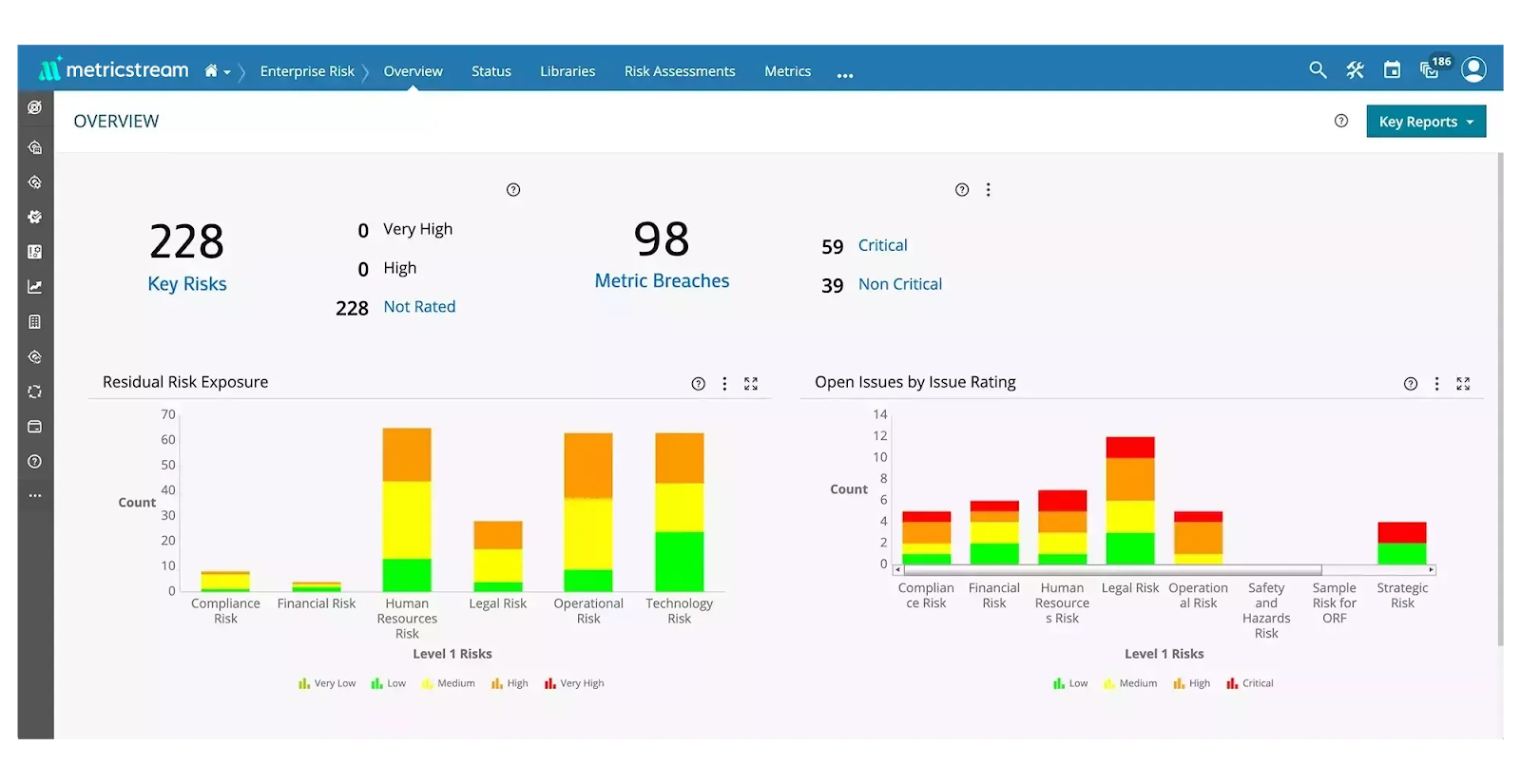
MetricStream offers a full-featured GRC solution with specialized tools for supplier risk and performance management, making it one of the most comprehensive supplier risk management software options for compliance-heavy industries like healthcare, finance, and pharmaceuticals.
Key Features:
- Regulatory intelligence to stay aligned with evolving laws and standards
- Integrated risk and compliance dashboards for real-time vendor tracking
- Continuous monitoring of supplier issues and exposure
- Business continuity planning tools to mitigate supply chain disruptions
Cons:
- Complex to implement and configure.
- May require dedicated admins or consultants to manage.
- Interfaces can be less intuitive for casual users.
Pricing:
Pricing is custom and generally enterprise-level, with packages starting at $25,000–$50,000/year, depending on use cases and industry.
6. Who Needs Supplier Risk Management Software? (Use Cases by Team)
Supplier risk management software is not just for procurement. It impacts finance, IT, compliance, and executive leadership.
If multiple teams are manually tracking vendor performance today, that’s usually a sign you’ve outgrown spreadsheets.
Here’s how different departments use supplier risk and performance management software:
Procurement Teams
- Monitor vendor SLAs and performance benchmarks
- Prevent high-risk renewals
- Identify vendor concentration risk
- Strengthen negotiation leverage
IT & Security Teams
- Continuously monitor vendor cybersecurity posture
- Automate third-party risk assessments
- Detect breaches or compliance lapses early
- Centralize risk documentation
Compliance & Risk Teams
- Map vendors to SOC 2, ISO 27001, and GDPR frameworks
- Automate audit evidence collection
- Maintain real-time compliance tracking
- Reduce manual reviews
Finance Leaders
- Assess supplier financial health
- Identify high-risk spending exposure
- Model disruption impact
- Optimize vendor portfolio risk
7. How to Choose the Right Supplier Risk Management Software for Your Organization?
A. Evaluate Features Against Risk and Compliance Goals
Not every platform fits every risk profile. Define your top priorities first, then shortlist tools that specialize in them.
Start by identifying:
- Cybersecurity risk exposure
- Financial stability concerns
- ESG and sustainability requirements
- Regulatory compliance obligations
B. Consider Ease of Integration and Workflow Automation
A powerful tool that doesn’t integrate will create more work, not less. Seamless connectivity reduces friction across teams.
Look for:
- ERP and procurement system integrations
- GRC and compliance tool compatibility
- Automated workflows for assessments and approvals
- Minimal manual data entry
C. Prioritize Tools with Real-Time Monitoring
Risk is not static. Your monitoring shouldn’t be either.
Essential capabilities include:
- Continuous vendor risk monitoring
- Real-time breach and vulnerability alerts
- Automated risk scoring updates
- Instant notifications for compliance gaps
D. Implementation Timeline and ROI Expectations
Implementing supplier risk management software does not need to take months. Modern platforms are built for faster onboarding and measurable business impact.
Here’s what to expect:
Implementation Timeline
- 2 to 6 weeks for most mid-sized teams
- Vendor data import and risk configuration
- ERP and compliance tool integrations
- Team onboarding and workflow setup
ROI Drivers
- Reduced vendor and SaaS spend
- Faster audit preparation
- Fewer compliance gaps
- Lower disruption risk from high-risk suppliers
Conclusion
With global supply chains becoming increasingly complex, relying on outdated spreadsheets or manual vendor reviews is risky and inefficient. The right supplier risk management software not only minimizes disruptions but also drives compliance, performance, and cost savings across your vendor ecosystem.
Whether you’re scaling your vendor base, navigating new regulations, or facing stricter audits, platforms like CloudEagle.ai, Sprinto, BitSight, and OneTrust offer a much-needed advantage.
Start by evaluating your current vendor risk processes, shortlist tools aligned with your compliance strategy, and deploy a solution that gives you real-time visibility into the entire supplier lifecycle.
FAQs
1. What is supplier management software?
Supplier management software helps businesses manage, evaluate, and monitor their vendors throughout the supply lifecycle to reduce risks and improve performance.
2. What software is used for risk management?
Popular supplier risk management tools include Sprinto, BitSight, UpGuard, and CloudEagle.ai. These platforms automate compliance, vendor assessment, and risk mitigation.
3. What is SCRM software?
SCRM (Supply Chain Risk Management) software identifies, monitors, and mitigates risks across your supply chain, covering financial, cyber, and compliance threats.
4. What is the risk management process for suppliers?
The process includes risk identification, assessment, prioritization, mitigation planning, continuous monitoring, and periodic reviews.
5. How to mitigate supply risk?
Mitigate supply risk by conducting due diligence, using supplier risk management software, diversifying suppliers, and implementing proactive risk alerts.
6. What are the 4 types of risk mitigation?
The four strategies are: Risk Avoidance, Risk Reduction, Risk Sharing (e.g., insurance), and Risk Retention (accepting the risk when minimal).
Your Vendors Are Moving Faster Than Your Controls.


.avif)


.avif)
.avif)




.png)